The Arctic Town Where Death Is Against the Law — And They Actually Mean It
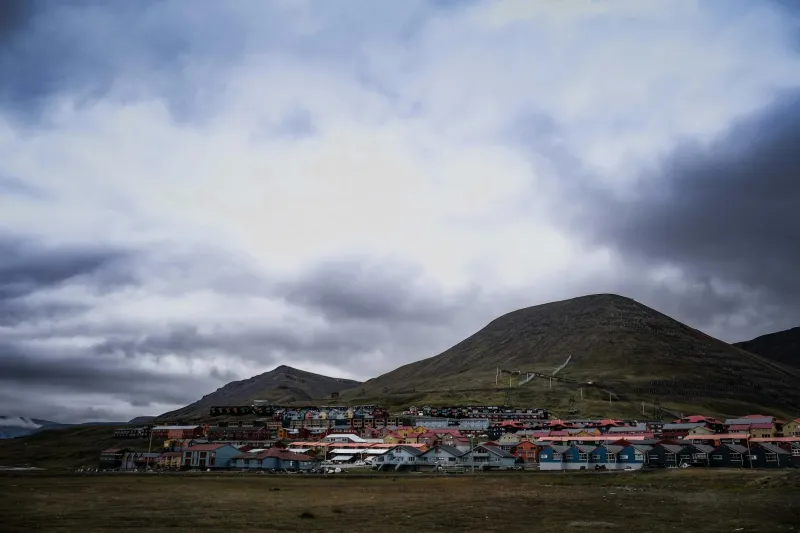
Welcome to the Town Where You Can't Die
Imagine living in a place so remote and unforgiving that even death requires a government permit and advance travel arrangements. Welcome to Longyearbyen, Norway — the world's northernmost settlement, where dying is not just frowned upon, it's essentially illegal.
This isn't some dark joke or medieval superstition. In this Arctic outpost of 2,400 residents, located just 800 miles from the North Pole, the local government has genuinely prohibited death within city limits. And unlike most bureaucratic rules that exist only on paper, this one is rigorously enforced.
The Grim Discovery That Changed Everything
The story begins in 1950, when local authorities made a chilling discovery that would reshape how an entire community thinks about mortality. During routine maintenance of the town cemetery, workers uncovered bodies that had been buried decades earlier — and they looked disturbingly fresh.
The permafrost, that permanently frozen layer of soil that defines Arctic life, had turned Longyearbyen's graveyard into an accidental morgue. Bodies weren't decomposing; they were essentially being freeze-dried for eternity. Even more disturbing, scientists discovered that deadly viruses and bacteria were still viable in these preserved corpses, including strains of the 1918 Spanish flu that had killed millions worldwide.
What started as a routine cemetery inspection had revealed a potential public health catastrophe frozen in time.
The Bureaucracy of Death
Faced with this macabre problem, Norwegian authorities did what bureaucrats do best: they created rules. Lots of them.
Today, if you're terminally ill and living in Longyearbyen, you'll receive what amounts to a deportation notice. The local government will arrange for your transfer to mainland Norway, where you can die in a place where the ground actually allows for proper burial. It's not exactly the kind of retirement planning most people expect.
The system is surprisingly thorough. Pregnant women in their final trimester face the same fate — shipped off to give birth elsewhere, since the town lacks adequate medical facilities for complications. Longyearbyen has become perhaps the only place on Earth where both birth and death are considered administrative problems requiring relocation.
When Death Doesn't Follow the Rules
Of course, death doesn't always wait for paperwork to be filed. When someone dies unexpectedly in Longyearbyen — from a heart attack, accident, or sudden illness — the body must be shipped to mainland Norway within days. The town maintains a small temporary morgue, essentially a high-tech freezer, designed to preserve bodies just long enough to arrange transport.
Local funeral director Lars Løvold has become something of an expert in Arctic death logistics. His job involves coordinating with airlines, weather services, and Norwegian authorities to ensure that bodies leave Longyearbyen as quickly as possible. "We've turned death into a shipping problem," he once observed with characteristic Norwegian pragmatism.
Living Under the Shadow of Mandatory Mortality Planning
For residents of Longyearbyen, this bizarre law creates a unique psychological landscape. Everyone knows that growing old here isn't really an option. The town has no retirement homes, no long-term care facilities, and no hospice services — because they're not needed. If you live long enough to need them, you won't be living here anymore.
This creates an odd demographic profile. Longyearbyen is a town of young and middle-aged people, with very few elderly residents. It's like a real-life version of "Logan's Run," except instead of being eliminated at 30, you're simply relocated when your health starts failing.
Marit Kristine, a 45-year-old teacher who's lived in Longyearbyen for eight years, describes the strange comfort this brings: "There's something liberating about knowing you won't grow old here. It makes every winter feel temporary, every year feel like an adventure rather than a slow march toward the inevitable."
The Practical Absurdity of Arctic Life
The death ban is just one of many surreal regulations that govern life in the world's northernmost town. Cats are banned (they might disturb Arctic wildlife), shoes must be removed before entering most buildings (to prevent tracking in coal dust), and it's illegal to die — but perfectly legal to carry a rifle for protection against polar bears.
The town exists primarily to support coal mining and Arctic research, making it a place where people come to work, not to put down permanent roots. Most residents stay for a few years before moving on, creating a transient community where everyone is essentially passing through.
A Window into Human Adaptability
Longyearbyen's death prohibition reveals something profound about human adaptability. When faced with an environment so extreme that even death becomes logistically impossible, people simply adjust their expectations and create new norms.
The town has essentially institutionalized the idea that some places are meant for living, not dying. In a world where people often spend enormous resources trying to extend life, Longyearbyen has created a community that accepts mortality as something that happens elsewhere.
The Ultimate NIMBY Problem
In American suburbs, residents might complain about proposed landfills or sewage treatment plants with "Not In My Backyard" protests. Longyearbyen has taken NIMBYism to its logical extreme: "Not In My Graveyard." They've successfully exported their mortality problem to mainland Norway, creating what might be the world's most effective death-avoidance strategy.
It's a reminder that even the most fundamental human experiences — birth, death, aging — can be shaped by geography, climate, and bureaucratic ingenuity. In Longyearbyen, death isn't just inevitable; it's a planning problem that requires advance notice and travel arrangements.
Somewhere in this frozen outpost, there's probably a government form for requesting permission to die elsewhere. And in a town where polar bears roam the streets and the sun doesn't rise for four months of the year, that might not even be the strangest thing about daily life.