The Space Rock That Crashed Into Legal History — And Started a Property War
When a meteorite smashed through Ann Hodges' roof in 1954, she became the first person ever struck by space debris. Then lawyers got involved, and things got really weird.
True stories that sound completely made up.
When a meteorite smashed through Ann Hodges' roof in 1954, she became the first person ever struck by space debris. Then lawyers got involved, and things got really weird.
In 1977, the mayor of tiny Kinney, Minnesota got so fed up with bureaucratic nonsense that he officially seceded from the United States. What started as a pothole problem turned into America's most ridiculous paperwork war.
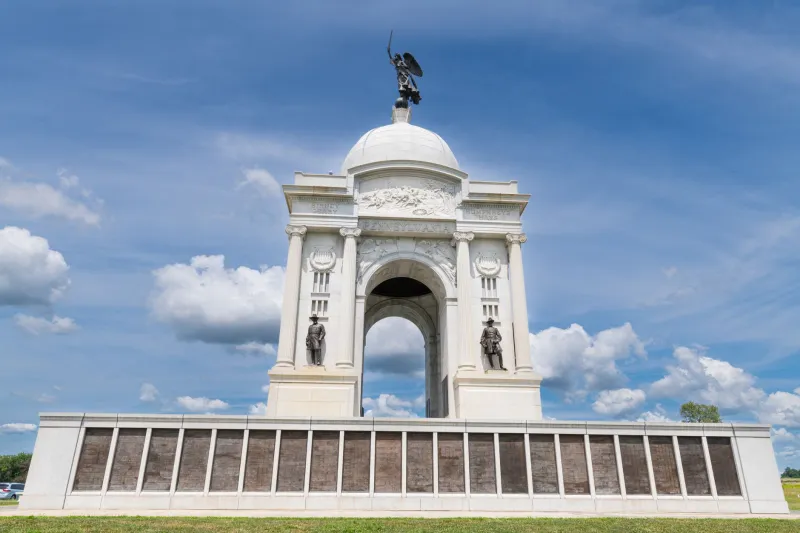
Edward Everett was the star speaker at Gettysburg in 1863, delivering a masterful two-hour oration. Then Lincoln got up and spoke for two minutes — and accidentally made Everett's speech disappear from history.
A desperate taxpayer in 1950s America filed his tax return on a brown paper bag because he'd run out of official forms. The IRS had to accept it, leading to a bureaucratic scramble that quietly changed tax law forever.
When federal time zone boundaries split a rural Indiana community down the middle, residents solved the problem by simply operating their post office and businesses on different clocks. The arrangement confused Washington for decades.
A small Midwestern town's poorly written noise ordinance from 1907 technically made whistling a criminal offense. Over a century later, the law is still on the books because fixing it would cost more than ignoring it.
Dr. Harold Wickham spent fifteen years tracking a mysterious atmospheric pattern he called 'the anomaly,' publicly predicting it would eventually produce a killer storm over his hometown. On June 15, 1963, his prophecy came true — with him as the victim.
In 1937, a routine municipal filing error in Halfway, Oregon accidentally criminalized the entire population under an obscure livestock ordinance. What followed was a bureaucratic nightmare that revealed just how fragile the line between lawful citizen and lawbreaker really is.
In 1954, a single transposed digit in a Bureau of Land Management auction document legally transferred 9,847 acres of federal grazing land to wheat farmer Ernest Kowalski for $127. The government's attempts to reverse the sale led to a landmark court case that changed federal land policy forever.
In 1981, two minor league teams played baseball for over eight hours across 33 innings, creating the longest professional game in history. By the end, players were hallucinating from exhaustion and fans were using programs as blankets.
Donald Miller walked into an Ohio courthouse in 2005, very much alive, but the judge told him he was too late to prove it. After being declared dead in absentia, Miller discovered that breathing wasn't enough evidence to overturn his legal death certificate.
Colma, California built its entire economy around being dead — literally. With 17 cemeteries and only 1,500 living residents, this town discovered what happens when your business model is eternal rest but regulations aren't.
The Korean War armistice was signed in 1953, but America technically stayed at war for decades because nobody bothered with a peace treaty. Meanwhile, soldiers on both sides kept quietly agreeing to stop shooting each other, creating their own unauthorized ceasefires that lasted longer than the official negotiations.
When a New York tax court needed to determine whether a sandwich qualified for a food tax exemption, one judge's ruling accidentally created the most important food classification decision in American legal history. The hot dog industry is still fighting the verdict.
When Angeles Duran discovered a loophole in international space law, she did what any reasonable person would do: she legally claimed ownership of the Sun and announced plans to charge humanity rent. The scariest part? Her paperwork was completely legitimate.
A surveying mistake left a small community straddling the US-Canada border in bureaucratic limbo for decades. Residents responded by quietly running their own international postal service from their homes.
A simple trademark application and an overworked government office nearly gave one man legal ownership of the word 'candy.' Major companies received cease-and-desist letters before anyone realized what had happened.
A Florida man turned the tables so completely on Bank of America that he ended up seizing their furniture with sheriff's deputies. The legal system that's supposed to protect big banks somehow ran entirely in reverse.
In the 1990s, a counterfeiter produced fake $100 bills so perfect that the Secret Service concluded it was easier to change real money than catch him. His forgeries were so flawless that some are still circulating undetected today.
At the 1904 Olympics, the first-place marathoner was disqualified for hitchhiking in a car, but the real winner had been fed strychnine and brandy during the race by his coaches. It was completely legal — and nearly killed him.