The Candy Bar That Accidentally Cooked Itself — And Changed Every Kitchen in America
When Your Snack Becomes Science
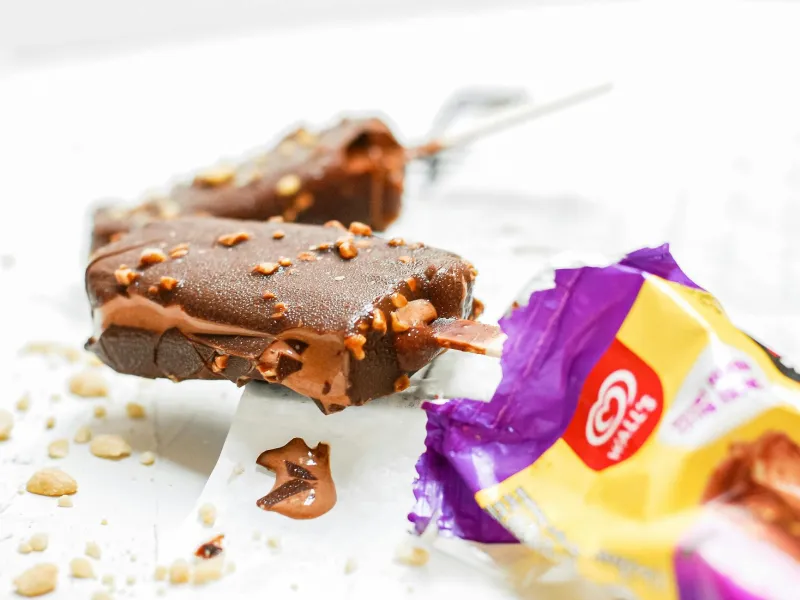
Picture this: You're at work, focused on your job, when you reach into your pocket for an afternoon snack and find... chocolate soup. For most people, this would be an annoying wardrobe malfunction. For Percy Spencer, a self-taught engineer at Raytheon in 1945, it was the "aha!" moment that would eventually put a cooking appliance in nearly every American home.
Spencer was standing near an active radar set called a magnetron — a device that generates microwaves for radar systems — when he noticed his chocolate bar had completely liquefied in his pocket. The logical response might have been to file a complaint about workplace safety or at least step away from the mysterious melting machine. Instead, Spencer got curious.
The Engineer Who Couldn't Leave Well Enough Alone
What happened next sounds like something out of a cartoon. Spencer, apparently unfazed by his chocolate disaster, decided to conduct some informal experiments. He grabbed a bag of popcorn kernels and held them near the magnetron. Within minutes, kernels were popping all over the lab floor. The next day, he brought in an egg, placed it near the device, and watched it cook — and then explode — in front of his startled colleague.
Most people would have called it a day after the egg explosion. Spencer called it the beginning of something revolutionary.
The science behind Spencer's accidental discovery was actually straightforward: microwaves cause water molecules in food to vibrate rapidly, generating heat from the inside out. But in 1945, this was cutting-edge physics accidentally stumbled upon by a guy who just wanted to eat his chocolate bar in peace.
From Lab Accident to Kitchen Catastrophe
Raytheon saw the potential in Spencer's discovery and decided to develop it into a commercial product. What they created first was nothing like the compact countertop appliances we know today. The original "Radarange" — yes, that was actually its name — stood six feet tall, weighed 750 pounds, and cost $5,000 (roughly $75,000 in today's money).
This massive machine was about as user-friendly as a nuclear reactor. It required water cooling, had to be connected to a plumbing system, and came with the kind of price tag that made it accessible only to restaurants, ships, and the occasional wealthy eccentric who really, really wanted to heat food faster.
The Monster That Ate Kitchens
The early Radarange was so intimidating that Raytheon had to include detailed safety instructions and training programs for operators. The idea of every American family having one of these behemoths in their kitchen was about as realistic as putting a jet engine in every garage.
But Spencer and his team kept tinkering. They realized that if they could shrink the technology and make it safer, they might have something. The breakthrough came when they figured out how to reduce the power output and contain the microwaves safely in a smaller unit.
The Slow Road to Every Break Room in America
It took more than two decades for microwave ovens to become common household items. The first countertop model appeared in 1967, priced at $495 — still expensive, but no longer requiring a bank loan. By the 1970s, prices had dropped enough that middle-class families could afford them.
The real turning point came when manufacturers started marketing microwaves not as fancy restaurant equipment, but as time-saving devices for busy families. Suddenly, the ability to reheat leftovers in minutes instead of half an hour became irresistible to American consumers.
The Accidental Revolution
Today, nearly 90% of American households own a microwave oven. That ubiquitous humming box reheating your coffee exists because one engineer in 1945 refused to ignore a melted chocolate bar. Spencer's accidental discovery didn't just create a new appliance — it fundamentally changed how Americans think about cooking and convenience.
The next time you're standing in front of a microwave at 2 AM, heating up leftover pizza, remember that you're participating in a revolution that started with workplace candy and scientific curiosity. Percy Spencer probably never imagined that his chocolate mishap would lead to millions of college students surviving on microwaved ramen, or that "microwave cooking" would become a legitimate category in cookbooks.
Sometimes the most world-changing discoveries happen when someone pays attention to the wrong thing at exactly the right moment. Spencer's melted chocolate bar proves that the line between accident and innovation is often thinner than the wrapper on a candy bar.