The War That Never Officially Ended
On July 27, 1953, representatives from North Korea, China, and the United Nations Command signed an armistice agreement at Panmunjom, officially ending active hostilities in the Korean War. The guns fell silent, the prisoners were exchanged, and everyone went home.
Except they didn't actually end the war. They just agreed to take a really, really long timeout.
An armistice isn't a peace treaty — it's essentially a military timeout that can be revoked at any moment. The Korean War armistice was supposed to be temporary, lasting just long enough for diplomats to negotiate a proper peace treaty. That was supposed to take a few months, maybe a year at most.
Seventy years later, that peace treaty still doesn't exist. Technically, the United States has been at war with North Korea longer than any conflict in American history.
When Soldiers Outsmarted Their Governments
But here's where the story gets genuinely bizarre: while politicians in Washington, Pyongyang, and Beijing spent decades refusing to officially end their war, the actual soldiers guarding the Demilitarized Zone kept making their own peace deals.
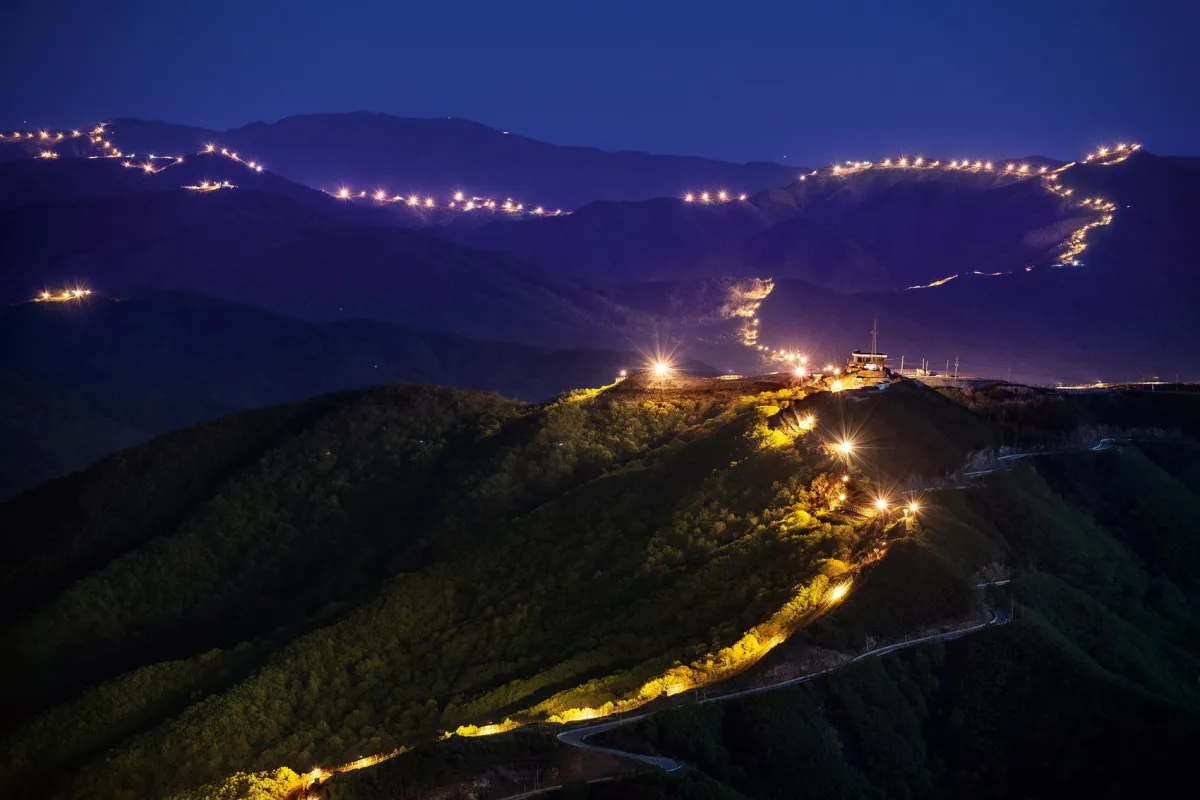 Photo: Demilitarized Zone, via www.aerialviews.org
These weren't official negotiations. They were practical arrangements between human beings who got tired of pointing guns at each other over imaginary lines.
American GIs and North Korean soldiers would establish informal protocols: where it was okay to walk, when they could relax their weapons, how to handle accidental border crossings without starting an international incident. These unofficial agreements often lasted years, outliving multiple rotations of commanding officers who had no idea their troops were conducting unauthorized diplomacy.
One former DMZ guard described how American and North Korean soldiers developed an elaborate system of hand signals and gestures that allowed them to communicate basic information — weather warnings, shift changes, even holiday greetings — without technically violating their orders to maintain hostile postures.
The Bureaucracy of Eternal Conflict
Meanwhile, the official war machinery ground on with surreal bureaucratic precision. Every few years, diplomats would announce breakthrough negotiations, only to have talks collapse over seemingly trivial details that had been irrelevant since the Eisenhower administration.
The Neutral Nations Supervisory Commission, established to monitor the armistice, continued filing reports about ceasefire violations decades after anyone stopped reading them. Military lawyers kept updating rules of engagement for a war that existed primarily on paper.
American soldiers stationed in South Korea received combat pay for serving in an active war zone, even though the most dangerous thing most of them faced was food poisoning from Seoul street vendors.
The DMZ's Unintentional Peace Dividend
The strangest consequence of this never-ending war was what happened to the Demilitarized Zone itself. The 2.5-mile-wide strip of land between North and South Korea, cleared of human activity and heavily mined, became an accidental nature preserve.
With no farming, construction, or development allowed, the DMZ evolved into one of Asia's most important wildlife habitats. Endangered species that had been driven to near-extinction in the rest of Korea thrived in the militarized no-man's land.
Red-crowned cranes, Asiatic black bears, and Korean tigers — animals that hadn't been seen in the region for decades — began returning to the DMZ. The world's most heavily fortified border accidentally became its most successful conservation zone.
Soldiers on both sides reported increasingly frequent wildlife encounters. Guard duty shifted from watching for enemy infiltrators to avoiding aggressive wild boars and protecting rare bird nests from military exercises.
When Peace Breaks Out Despite the War
By the 1980s and 1990s, the informal soldier-to-soldier détente had become so established that actual combat readiness began to suffer. American commanders worried that their troops were getting too comfortable with their North Korean counterparts.
There were reports of unauthorized gift exchanges during holidays, joint wildlife rescue operations when animals got caught in minefields, and even instances where soldiers from both sides collaborated to repair damaged sections of the border fence — technically an act of cooperation between enemy forces.
One particularly surreal incident involved American and North Korean soldiers working together to rescue a family of deer that had wandered into a minefield. The operation required both sides to temporarily suspend their military postures, communicate directly about mine locations, and coordinate a joint rescue effort — all while technically being at war with each other.
The Peace That Dared Not Speak Its Name
What emerged along the DMZ was something unprecedented in military history: a functional peace maintained by people who were officially supposed to be fighting each other.
Soldiers developed their own diplomatic protocols, their own rules of engagement, and their own methods for preventing incidents that could escalate into actual combat. They created a working relationship that allowed both sides to maintain their official hostility while avoiding any actual violence.
This unofficial peace was so effective that when tensions did flare up — usually because of political events in Washington or Pyongyang — the biggest challenge for military commanders was convincing their own troops to act more hostile toward enemies they'd been quietly cooperating with for years.
The War That Ended Everywhere Except on Paper
The Korean War reveals something profound about the gap between political rhetoric and human reality. While governments can maintain official hostilities indefinitely, the people actually tasked with carrying out those hostilities often find more practical solutions.
Soldiers facing each other across the DMZ understood something their political leaders never grasped: you can't maintain combat readiness indefinitely against an enemy who's also trying to avoid a fight.
So they created their own peace, one unauthorized handshake at a time. It wasn't the peace treaty their governments refused to sign, but it was the peace that actually mattered — the one that kept people alive while politicians argued about paperwork.
The next time someone tells you peace is impossible, remember the Korean DMZ: the place where war and peace coexisted for decades, and the human beings who figured out how to choose peace even when their governments chose war.