The Checkout That Launched a Thousand Nightmares
Picture this: you borrow a book from your local library, forget about it for a few months, and then remember with that familiar pang of dread. Now imagine that "few months" was actually 145 years, and the late fee had compounded into something that could buy you a small house.
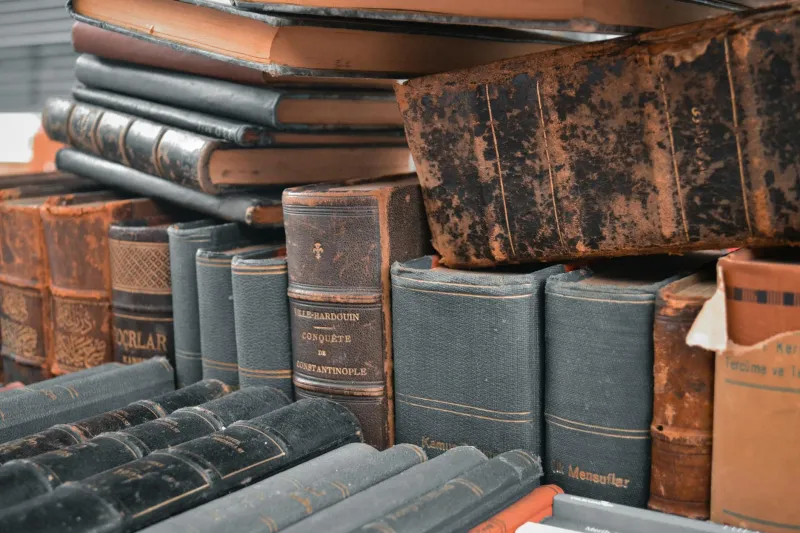
That's exactly what happened in 1968, when a leather-bound volume titled "Feats on the Fiord" was quietly returned to the Hingham Public Library in Massachusetts. The book had originally been checked out in 1823 — back when Andrew Jackson was still a year away from becoming president and the Erie Canal was considered cutting-edge infrastructure.
The Mathematics of Procrastination
The original borrower, whose name has been mercifully lost to history, had likely assumed the book would be forgotten in the chaos of 19th-century record-keeping. They were wrong. Spectacularly wrong.
Librarian calculations revealed that at the standard late fee of two cents per day (which seemed reasonable in 1823), the accumulated fine had grown to over $2,200 by 1968. To put that in perspective, the median home price in Massachusetts that year was around $4,500. This single overdue book had racked up nearly half the cost of an entire house.
The story gets stranger: the library actually tried to collect.
When Bureaucracy Meets Absurdity
Most institutions would have written off such an obviously uncollectable debt decades earlier. Not Hingham Public Library. Their meticulous record-keeping had preserved every detail of the transaction, and their sense of civic duty apparently knew no statute of limitations.
The person who returned the book — a descendant of the original borrower who had discovered it in an old trunk — was presented with the full calculation. The library staff had done their homework, complete with compound interest tables and inflation adjustments that would make an IRS auditor proud.
What happened next defied all reasonable expectations: they paid it.
The Great American Library Fine Epidemic
Hingham wasn't alone in their dedication to collecting impossible debts. Throughout the mid-20th century, American libraries began discovering similar time bombs in their record systems. A Cincinnati library found a book returned in 1955 that had been overdue since 1885. A San Francisco branch calculated that one patron owed more than $3,000 for a cookbook that had been missing since the 1906 earthquake.
The phenomenon became so common that library associations began holding conferences specifically to address "legacy fine management." Librarians shared war stories of patrons inheriting thousand-dollar book debts from great-grandparents they'd never met.
The Economics of Literary Guilt
What makes these stories truly unbelievable isn't just the astronomical numbers — it's that people kept paying them. Sociologists studying the phenomenon discovered something fascinating about American psychology: guilt over library fines apparently transcends generations.
Families would receive letters about books their ancestors had borrowed, complete with compound interest calculations that had grown beyond all reason, and instead of laughing it off, they'd write checks. The moral authority of libraries, it turned out, was so deeply embedded in American culture that even obviously absurd debts felt legitimate.
The Modern Legacy
The Hingham case became legendary in library circles, spawning policy changes across the country. Most libraries now cap late fees at the replacement cost of the book, specifically to avoid creating these accidental mortgage-sized debts.
But the psychological impact lingers. Walk into any American library today and mention overdue books, and you'll see a particular kind of panic cross people's faces — the same expression their great-great-grandparents might have worn when that first two-cent fine started accumulating.
The Ultimate Plot Twist
The final irony? "Feats on the Fiord," the book that started this whole mess, was a children's adventure story that originally cost twelve cents. After 145 years of late fees, legal research, and administrative overhead, that twelve-cent book had cost the combined efforts of librarians, descendants, and bureaucrats more than most people's annual salary.
The book itself? It sits today in a climate-controlled rare books section, presumably on permanent loan to prevent any future mathematical disasters. Sometimes the most unbelievable part of reality isn't what happened — it's that everyone involved thought it made perfect sense.