When Uncle Sam Made the World's Most Expensive Typo
Ernest Kowalski thought he was bidding on 98 acres of federal grazing land near his Kansas wheat farm. The Bureau of Land Management thought they were selling 98 acres of federal grazing land near his Kansas wheat farm. Everyone was wrong.
Thanks to a single transposed digit in the auction documents, Kowalski actually purchased 9,847 acres — nearly 100 times what he intended to buy — for the bargain price of $127. By the time anyone noticed the error, the courts had ruled it was too late to undo what became known as the "Kowalski Acquisition," one of the largest accidental land transfers in American history.
A Simple Farmer's Simple Plan
In the spring of 1954, Ernest Kowalski was a 42-year-old wheat farmer struggling to expand his operation near Hays, Kansas. When the Bureau of Land Management announced a surplus land auction, Kowalski saw an opportunity to add some affordable grazing acreage to his 640-acre farm.
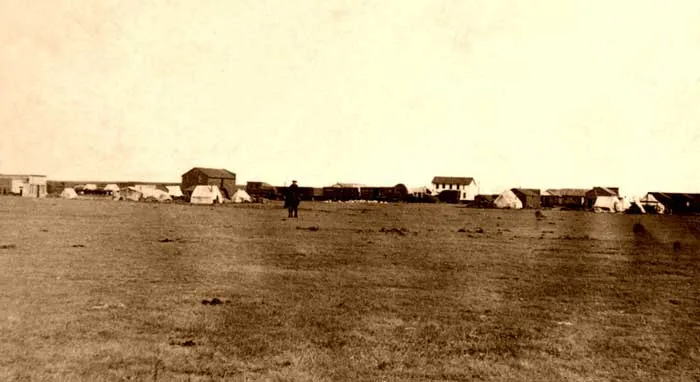 Photo: Hays, Kansas, via legendsofkansas.com
The BLM was selling off small parcels of land that had been acquired during the Dust Bowl era but were no longer needed for soil conservation. Most lots were between 40 and 160 acres — perfect for small farmers looking to expand.
Kowalski studied the auction catalog and identified Lot 247: 98 acres of grassland adjacent to his property, with a minimum bid of $127. It seemed like a reasonable investment for land that would let him graze a few dozen cattle.
The Paperwork That Changed Everything
What Kowalski didn't know was that someone at the BLM's Denver office had made a critical error while preparing the auction documents. A clerk transcribing land survey data had accidentally written "9847" instead of "98.47" when converting from the original survey measurements.
The mistake was compounded by the agency's filing system. In 1954, the BLM was transitioning from handwritten records to typewritten documents, and the new format didn't include decimal points for acreage under 100 acres. When the clerk saw "98.47 acres," they typed "9847 acres," assuming the decimal was a smudge on the original document.
Nobody caught the error during review because 9,847 acres wasn't unusually large for federal land sales. The BLM regularly auctioned off ranch-sized parcels to private buyers.
Auction Day Arrives
On June 15, 1954, Kowalski drove to the courthouse in Hays for the land auction. He was one of only three bidders for Lot 247, which the auctioneer described as "approximately 98 acres of grazing land" — reading from notes that still showed the original, intended acreage.
Kowalski bid the minimum $127 and won easily. He signed the purchase documents without reading them carefully, assuming they matched what the auctioneer had described. The BLM representative handed him a deed that legally transferred ownership of 9,847 acres of federal land.
"I thought I was buying a small pasture," Kowalski later told the Kansas City Star. "I figured 98 acres for $127 was a fair deal. I never imagined Uncle Sam was about to make me the biggest landowner in Ellis County."
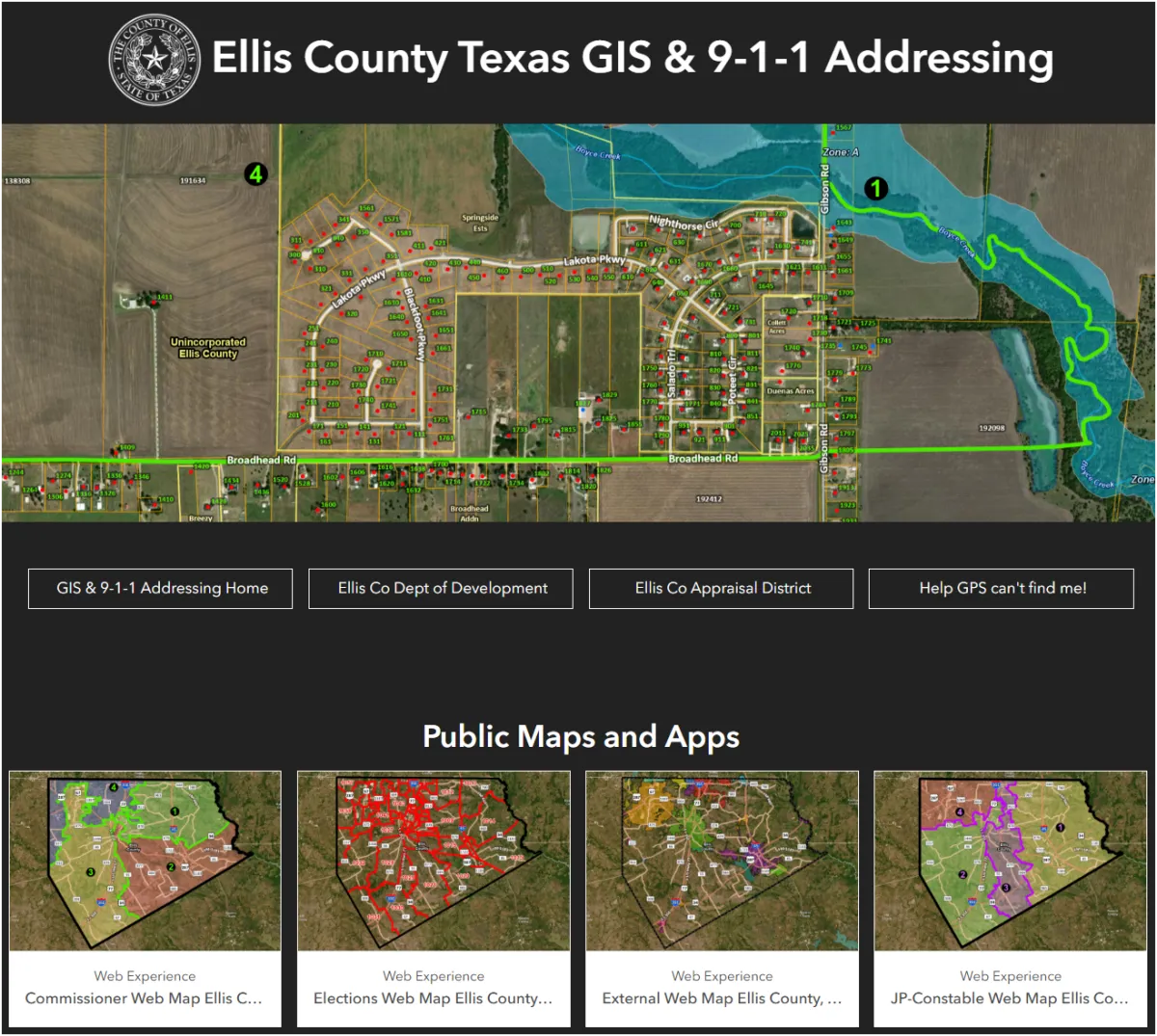 Photo: Ellis County, via tx-elliscounty.civicplus.com
The Discovery That Changed Everything
Kowalski didn't realize what he'd actually purchased until three months later, when a county assessor arrived to update his property tax records. The assessor informed him that his new federal land purchase had increased his total holdings to over 10,000 acres, making him liable for significant property taxes on land he didn't know he owned.
"Ernest called me up laughing," remembered his neighbor, Frank Mueller. "He said, 'Frank, the government just accidentally sold me half the county.' I thought he was joking until I saw the deed."
Kowalski drove out to examine his new property and discovered he now owned a vast stretch of grassland extending far beyond his original farm boundaries. The land included several natural springs, a small creek, and mineral rights that would later prove valuable.
The Government Fights Back
When the Bureau of Land Management discovered the error in September 1954, they immediately demanded that Kowalski return the excess land. Agency officials argued that the sale was clearly a clerical mistake and offered to honor the original intent: selling him 98 acres for $127 and refunding his money for the rest.
Kowalski refused. His lawyer, a young attorney named David Brennan, argued that the federal government was bound by its own paperwork. The deed was legally valid, properly executed, and filed with the county. According to Brennan, the BLM's internal errors didn't void a legitimate property transfer.
"The government can't take back land sales just because they made a mistake," Brennan told reporters. "If that were allowed, no federal land purchase would ever be secure."
A Legal Battle for the Ages
The case, officially titled United States v. Kowalski, became a landmark federal property law dispute. The Justice Department argued that "obvious clerical errors" in government documents could be corrected retroactively, especially when they resulted in "unconscionable windfalls" for private parties.
Kowalski's legal team countered that the federal government should be held to the same standards as any other property seller. They pointed out that Kowalski had acted in good faith, paid the required amount, and received valid documentation of his purchase.
The case attracted national attention as a David-versus-Goliath story: a small Kansas farmer taking on the federal bureaucracy over a paperwork mistake.
The Court's Stunning Decision
In March 1956, Federal Judge William Morrison ruled in favor of Kowalski, declaring that the land sale was "legally valid and binding." Morrison's decision established several important precedents:
The federal government could not void property sales based solely on internal clerical errors. Private buyers who acted in good faith were entitled to rely on official government documents. Federal agencies were responsible for their own mistakes and couldn't shift the burden to innocent purchasers.
"The Bureau of Land Management's error, while regrettable, does not justify depriving Mr. Kowalski of property he legally purchased," Morrison wrote. "The integrity of federal land sales depends on the government honoring its own documentation."
The Aftermath That Changed Everything
The Kowalski decision prompted an immediate overhaul of federal land sale procedures. The BLM implemented mandatory double-checking of all auction documents, required supervisory approval for sales over 1,000 acres, and established standardized formatting to prevent transcription errors.
Kowalski, meanwhile, became an accidental cattle baron. He used his vast new acreage to develop one of Kansas's largest ranching operations, eventually employing dozens of workers and becoming a major regional employer.
"I went to buy a small pasture and ended up with an empire," he reflected years later. "Sometimes the best business deals are the ones you never meant to make."
The Legacy of a Lucky Mistake
The "Kowalski Acquisition" remains one of the most significant accidental property transfers in American history. Legal scholars still cite the case when discussing federal contract law and the limits of government authority to correct its own mistakes.
More importantly, it established a principle that protects all federal land buyers: once the government sells you property through official channels, that sale is final — even if someone in Washington made a mistake.
Ernest Kowalski passed away in 1987, but his family still operates the ranch he accidentally acquired. The original 98 acres he intended to buy? They're now part of a 12,000-acre operation that employs over 50 people and generates millions in annual revenue.
Not bad for a $127 investment in government paperwork — even if nobody meant for it to happen.