When Minnesota's Angriest Mayor Declared War on America — Over Road Repair
The Pothole That Broke the Union
Some divorces start with irreconcilable differences. Others start with a pothole.
In the summer of 1977, the residents of Kinney, Minnesota — all 27 of them — faced a problem that would make any small-town mayor lose their mind. Their main road was falling apart, pockmarked with craters deep enough to swallow a Buick. When Mayor Robert Arko contacted the state for help, he got the bureaucratic runaround that would make a saint consider sedition.
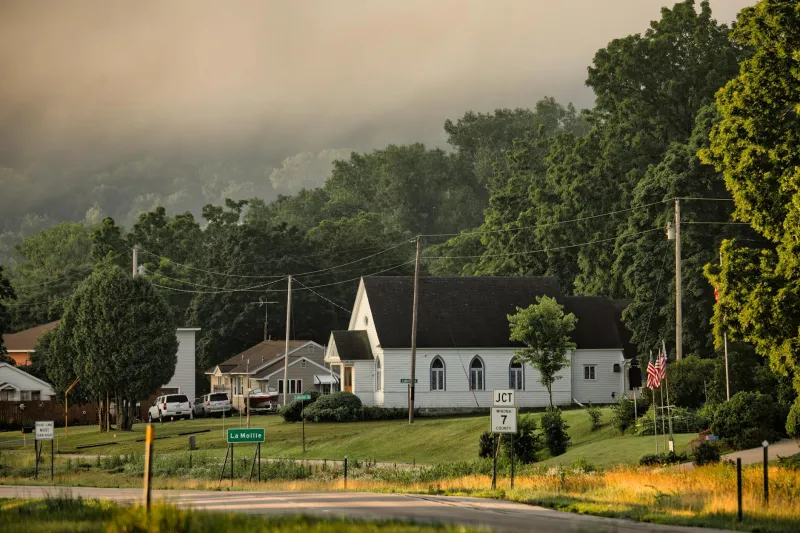
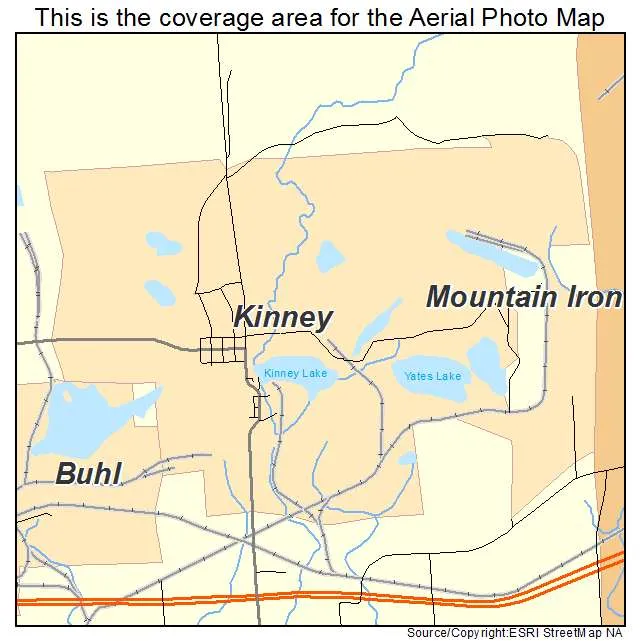 Photo: Kinney, Minnesota, via www.landsat.com
"Fix it yourselves," the state essentially told them. "It's not our problem."
So Arko did what any reasonable person would do when faced with government indifference: he declared independence from the United States of America.
The Republic of Kinney Is Born
On August 26, 1977, Mayor Arko stood before his tiny constituency and officially announced that Kinney was seceding from the union. The town would become the "Republic of Kinney," complete with its own constitution, flag, and — most importantly — its own road maintenance budget.
 Photo: Republic of Kinney, via iamkinney.com
What started as political theater quickly took on a life of its own. Arko appointed himself President-for-Life (a title that sounds more ominous than it actually was, considering the "life" part applied to governing 27 people in rural Minnesota). He issued official proclamations, designed a flag featuring a beer can and a fishing lure, and even started charging a "border crossing fee" of $1 for anyone wanting to enter their sovereign territory.
The whole thing was tongue-in-cheek, a frustrated mayor's way of giving the middle finger to bureaucratic incompetence. But then something unexpected happened: people started taking it seriously.
When Satire Meets Bureaucracy
News of Kinney's "secession" spread beyond Minnesota's borders, picked up by newspapers across the country. Suddenly, this microscopic town was fielding calls from reporters, curiosity seekers, and — most bizarrely — actual government officials who seemed genuinely confused about what to do with a self-declared republic in their midst.
The real absurdity began when federal agencies started responding with official paperwork. The State Department sent forms inquiring about diplomatic relations. The IRS wanted to know about tax obligations for this new "foreign nation." Border Patrol agents actually showed up to investigate reports of an unauthorized international boundary.
Arko found himself in the surreal position of having to explain to federal officials that his "nation" was basically a practical joke with a population smaller than most college dorm floors.
The Bureaucratic Circus Continues
But the government machinery, once set in motion, proved difficult to stop. Legal experts began debating whether Kinney's secession had any constitutional validity. Tourism officials from Minnesota started promoting visits to "America's newest foreign country." The town's single business — a bar called the Kinney Store — began selling "Republic of Kinney" t-shirts and passports.
Meanwhile, the original problem — the cratered road that started this whole mess — remained unfixed.
Arko discovered that running a joke country was surprisingly complicated. He fielded calls from people wanting to claim asylum, investors interested in the republic's "natural resources" (mostly rocks and pine trees), and even a few marriage proposals from women who apparently found the idea of dating a head of state irresistible.
The End of an Empire
The Republic of Kinney's independence lasted exactly five months. In January 1978, faced with mounting paperwork from confused federal agencies and a growing pile of "diplomatic" correspondence, Arko officially rejoined the United States.
The ceremony was appropriately low-key: Arko simply lowered the Republic of Kinney flag and raised the Stars and Stripes while a handful of residents watched and the local newspaper photographer captured the moment for posterity.
But here's the kicker: the road still wasn't fixed.
The Legacy of America's Shortest-Lived Republic
Kinney's brief experiment in independence revealed something fascinating about how government actually works — or doesn't work. A mayor's frustrated joke exposed the rigid, literal-mindedness of federal bureaucracy, where agencies responded to a clearly satirical secession with the same seriousness they'd apply to an actual international crisis.
The whole episode also highlighted the absurd catch-22 of local government: small towns are expected to maintain infrastructure with limited resources, but when they ask for help, they're told to figure it out themselves. Sometimes it takes declaring war on your own country to get people's attention.
Today, Kinney remains part of Minnesota, though visitors can still buy Republic of Kinney memorabilia from local shops. The road that started it all? It was finally paved in 1982 — five years after the "revolution" and only after the story had become famous enough to embarrass state officials into action.
Sometimes the most effective way to fix a pothole is to threaten to leave the country over it.