How One Man's Backyard Became an Enemy of the State (And Nobody Really Noticed)
When Your Backyard Becomes a Country
Imagine waking up one morning and deciding your house is no longer part of the United States. Not as a joke. Not as performance art. But as a genuine, documented political act. Now imagine that this decision somehow spirals into a legitimate (if entirely symbolic) declaration of war against the federal government—and nobody stops you.
This actually happened. In the high desert of Nevada, about 60 miles south of Reno, sits a small residential property that has been at war with the United States for nearly five decades. The nation is called Molossia. The war was never fought. And the U.S. government has never formally acknowledged that either thing is real.
The Birth of a Backyard Nation
Molossia was founded in 1977 by Kevin Baugh, a self-described libertarian who grew tired of government regulation, taxation, and what he saw as the creeping overreach of federal authority. Rather than move to a compound in the mountains or join an existing militia, Baugh took a different approach: he simply declared his property a sovereign nation.
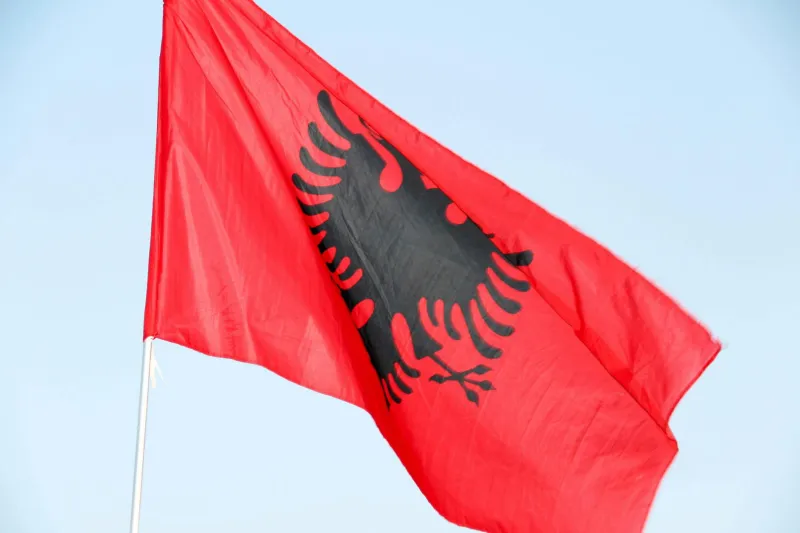
On April 23, 1977, Baugh issued a formal declaration of independence. He designed a flag (featuring a golden gavel). He created a constitution. He established a government structure with himself as President for Life. He even minted his own currency. To observers at the time, it seemed like an elaborate prank—a man playing at nationhood in his own backyard while the rest of the world carried on.
But Baugh was serious. And more importantly, he was methodical. He documented everything. He filed paperwork. He created the appearance of legitimate governance with such precision that Molossia became something entirely unexpected: a genuine legal curiosity that the U.S. government couldn't quite figure out how to dismiss.
The Escalation That Nobody Expected
For years, Molossia existed in a kind of legal limbo. It was ignored by federal authorities, mocked by neighbors, and treated as a harmless eccentricity by the few people who knew about it. Baugh expanded his territory slightly, added more governmental structures, and continued issuing official proclamations from his tiny nation.
Then, in the 1980s, something strange happened. Molossia began issuing formal declarations of war against various countries and entities. These weren't serious military threats. They were symbolic gestures—political statements dressed up in the language of international conflict. Molossia declared war on the United States. Then on the Soviet Union. Then on other micronations that had popped up across America, each one a tiny sovereign state carved out of someone's property through sheer force of will and paperwork.
The U.S. government's response was silence.
There was no federal response. No cease-and-desist letters. No attempt to invalidate Molossia's claims to statehood. The federal government simply didn't engage with the premise that a private citizen could declare war on the United States from a residential lot in Nevada. To acknowledge Molossia as a legitimate nation, even to deny its legitimacy in an official capacity, would be to grant it a level of recognition that the government seemed unwilling to provide.
So the war continued—not as a conflict, but as a kind of permanent legal ghost. A state of hostility that existed entirely on paper, acknowledged by one side and simply ignored by the other.
The Micronation Movement in America
Molossia wasn't alone. Throughout the late 20th century, dozens of Americans began establishing micronations on their own property. Some were serious political statements about government overreach. Others were artistic projects. A few were genuine attempts to create alternative societies.
There was the Free Republic of Minerva, which tried to establish a nation on artificial islands in the South Pacific. There was the Kingdom of Talossa, which exists primarily online but has a legitimate territorial claim in Wisconsin. There was the Principality of Sealand, built on an abandoned military platform in the North Sea, which actually issued passports and claimed diplomatic status.
These micronations existed in a strange legal space—not quite countries, not quite performance art, not quite serious political movements. They represented something uniquely American: the idea that a person could simply opt out of the existing system and create their own government.
Why the Government Never Fought Back
The answer is surprisingly practical. Molossia poses no actual threat to U.S. sovereignty. It has no military. It has no real resources. It controls only a small plot of land that the federal government could seize at any moment if it chose to do so. By ignoring Molossia's war declaration, the U.S. government avoided giving it legitimacy while also avoiding the spectacle of a federal crackdown against what amounts to a man's private property dispute.
Moreover, officially ending a war requires acknowledging that a war existed in the first place. To formally make peace with Molossia would be to admit that the nation's war declaration had merit. To ignore it indefinitely is to deny that anything worth responding to has occurred.
So the war persists in this strange state of mutual non-recognition. Molossia claims it is at war with the United States. The United States doesn't acknowledge that Molossia exists. And both sides have apparently decided that this arrangement works fine.
A Stranger in a Strange Land
Today, Molossia remains exactly what it was in 1977: a small residential property in Nevada where a man has decided to be his own nation. Kevin Baugh still lives there. The flag still flies. The constitution still exists. And technically, according to Molossia's own legal documents, the nation remains at war with the United States—a war that was never declared by Congress, never fought by soldiers, and never formally ended by treaty.
It's the kind of story that sounds completely made up. A man declares his house a country. The country declares war. Nobody fights. The war never ends. But it's all real. It's all documented. And it's all thoroughly, bewilderingly true.