Meet the Navy's Secret Weapon: Dolphins Who Actually Fought in Wars
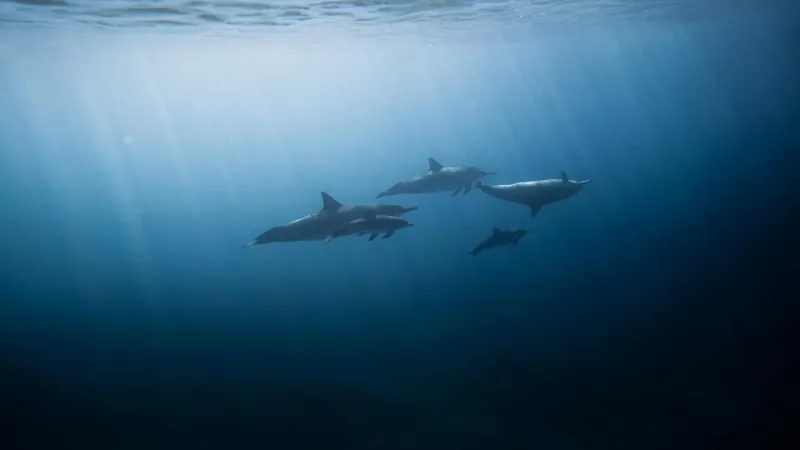
When Flipper Joined the Military
The year was 1960, and the U.S. Navy had a problem. Soviet divers were getting increasingly sophisticated at infiltrating American naval bases, and traditional security measures weren't cutting it. The solution they came up with sounds like something from a Saturday morning cartoon: recruit dolphins as underwater sentries.
What started as a desperate Cold War experiment became one of the most successful — and bizarre — military programs in American history. For over six decades, the Navy Marine Mammal Program has trained bottlenose dolphins to detect mines, locate enemy divers, and guard some of America's most sensitive military installations.
The strangest part? It actually works.
The Science Behind Dolphin Soldiers
Dolphins possess natural sonar capabilities that make the most advanced human technology look primitive. Their echolocation system can detect objects buried in sand, distinguish between different types of metal, and identify threats that would be invisible to human divers or mechanical sensors.
"A dolphin can detect a mine buried three feet underwater in sand from 400 feet away," explains Dr. James Finneran, a marine mammal researcher who worked with the program. "No human technology comes close to that level of precision."
The Navy's dolphin training facility in San Diego became ground zero for what military officials euphemistically called "biological warfare research." Dolphins learned to approach suspicious divers, attach tracking devices to their equipment, and even deliver handcuffs that would automatically lock around an intruder's leg.
But the most classified missions involved nuclear weapons.
Guardian Angels with Fins
During the height of the Cold War, Navy dolphins were deployed to protect nuclear submarine bases and weapons storage facilities. Their job was simple but crucial: patrol the waters around these installations and alert human handlers to any unauthorized presence.
The dolphins proved remarkably effective. Classified documents released decades later revealed that dolphin patrols had a 100% success rate in detecting test infiltrations — a record that human guards couldn't match.
"These animals could work in complete darkness, in murky water, in conditions where human divers would be essentially blind," notes retired Navy Captain Robert Gormley, who oversaw dolphin operations in the 1980s. "They were the perfect biological security system."
The most surreal aspect of the program was how the dolphins seemed to understand the importance of their work. Trainers reported that the animals showed increased alertness during actual security situations, as if they could sense when exercises had become real threats.
Combat Deployments Nobody Talks About
While the Navy officially maintains that dolphins were never used in "offensive" operations, declassified records suggest otherwise. During the Vietnam War, Navy dolphins were reportedly deployed to protect American ships in Cam Ranh Bay, where they successfully detected Viet Cong divers attempting to plant explosives.
More controversially, some former trainers claim that dolphins were equipped with CO2 cartridges designed to force enemy divers to the surface — a tactic that blurred the line between detection and direct combat.
The program expanded dramatically during the 1980s, with dolphins deployed to protect U.S. naval facilities in the Persian Gulf. These missions remain highly classified, but military sources suggest the animals prevented multiple successful attacks on American ships and installations.
The Ethical Minefield
Using marine mammals as military assets raised obvious ethical questions that the Navy struggled to address. Animal rights groups argued that training dolphins for warfare violated their natural behavior and put them in danger.
The Navy's response was pragmatic: the dolphins were volunteers. Unlike human soldiers, the animals could simply swim away if they didn't want to participate. The fact that they consistently returned to their handlers suggested they were willing participants in the program.
"These dolphins lived longer, healthier lives than their wild counterparts," argues Dr. Mark Xitco, former director of the program. "They received world-class veterinary care, regular meals, and mental stimulation that kept them engaged and active."
Critics remained unconvinced, pointing out that the dolphins had no way to understand the potential consequences of their military service.
Still Swimming After All These Years
Despite decades of controversy, the Navy Marine Mammal Program continues today. The current dolphin population at the San Diego facility includes about 70 bottlenose dolphins and 30 California sea lions, making it one of the largest marine mammal research programs in the world.
Modern dolphin missions focus primarily on mine detection and recovery operations, though the Navy remains deliberately vague about other capabilities. The animals have been deployed to clear harbors in Iraq and Afghanistan, and they continue to guard sensitive U.S. naval installations.
Recent technological advances have made some observers wonder whether artificial sonar systems might eventually replace biological ones. But Navy officials insist that no mechanical system can match the versatility and intelligence of a living dolphin.
The Ultimate Military Secret
Perhaps the most remarkable aspect of this story is how well the Navy kept it secret for so long. For decades, one of America's most effective military programs operated in plain sight at a facility that looked like nothing more than a marine research station.
The dolphins themselves became unwitting keepers of state secrets, carrying out classified missions while the public remained completely unaware of their military service. It's a reminder that some of the most important chapters in military history are written by participants who can never tell their own stories.
Today, as the Navy continues to refine its marine mammal capabilities, one thing remains clear: in a world of increasingly sophisticated military technology, sometimes the most effective weapon is one that evolution perfected millions of years ago.