One Town, Three Names, Three Times the People: The Census Blunder That Almost Rewrote Congress
The United States Constitution is a document that takes its numbers seriously. Every ten years, the country counts its people, and those numbers determine political power — how many seats each state gets in the House of Representatives, how federal money flows, who matters and how much.
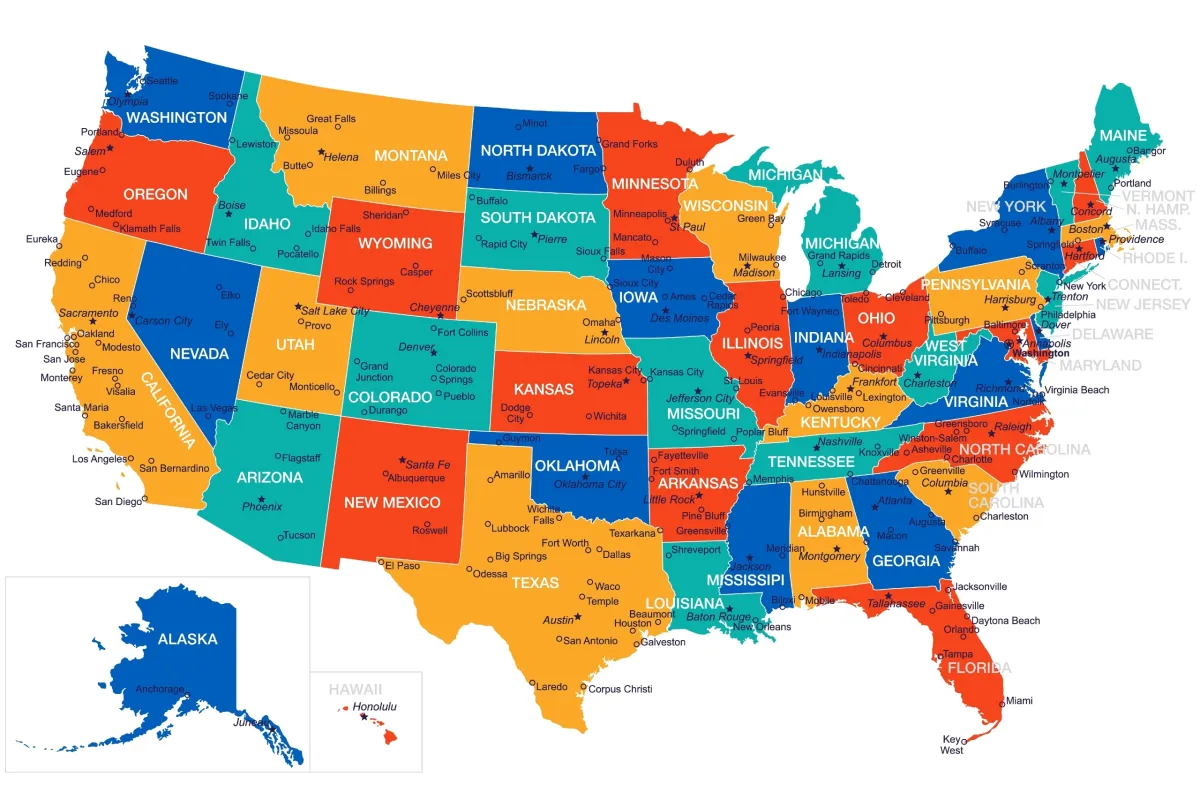 Photo: United States, via www.mappr.co
It is, in theory, a precise and carefully managed process.
In the 1840s, a single misspelled county name nearly made a mockery of the whole thing.
The Census Was Already a Mess
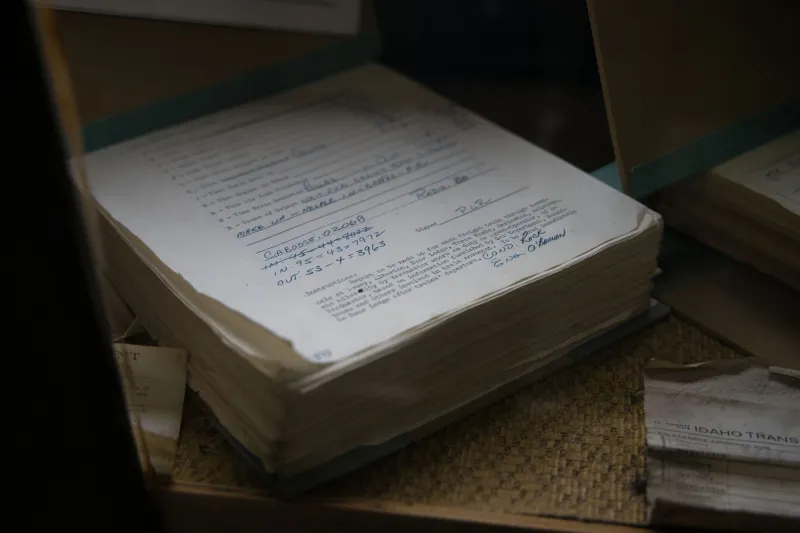
Before we get to the specific disaster, it helps to understand what the U.S. Census looked like in the nineteenth century. There were no computers, no standardized forms, and no central database cross-referencing entries in real time. Census takers — called enumerators — were sent out on foot and horseback to knock on doors and record what they found. They wrote by hand. They spelled things phonetically. They worked quickly and alone.
The data then traveled back to Washington through layers of clerks, copyists, and administrators, each transcribing from the last person's handwriting. Errors didn't just happen. They accumulated.
Ohio in the 1840s was a state in rapid transition — fast-growing, with new towns sprouting along river routes and county lines that were themselves still being debated and redrawn. It was, in other words, exactly the kind of place where a clerical error could do maximum damage.
Three Spellings, One Town, One Very Big Problem
The specific mistake seems almost too simple to have caused so much trouble. A small river town — thriving enough to have a real population count, but not famous enough to have a standardized spelling in common use — was recorded by three different enumerators working in overlapping jurisdictions. Each of them spelled the county name slightly differently. Each entry was logged as a separate location.
When the raw data arrived in Washington and clerks began aggregating population totals, they didn't recognize the three entries as the same place. Why would they? The spellings were different. The county attributions were inconsistent. From the outside, it looked like three separate communities, each with its own population.
The result: the town's actual population was counted once, twice, and then a third time. On the federal ledger, a settlement of a few thousand people suddenly appeared to be home to something closer to ten thousand.
Congressional Arithmetic Goes Wrong
Here is where the stakes escalate from embarrassing to genuinely alarming.
Under the apportionment formula in use at the time, population thresholds determined congressional representation. Enough people in a district meant an additional seat in the House. The inflated numbers from the triple-counted town pushed the surrounding region over exactly that threshold.
Federal officials, working from the compiled totals and seeing no reason to doubt them, began the process of recognizing the new congressional district. Election logistics were set in motion. Word spread through the region.
And then a candidate started campaigning.
He made speeches. He shook hands. He built a platform and an argument for why he deserved to represent the people of this district in Washington. He had no reason to suspect that the district he was running to represent was built on a foundation of bad handwriting and duplicate entries.
The Scramble to Undo the Math
Somewhere in the chain of review — accounts vary on exactly who caught it and how — someone noticed that the population numbers didn't add up. The region's growth was plausible, but not that plausible. A closer look at the source records revealed the three entries, the three different spellings, and the obvious conclusion.
The same town had been counted three times.
Federal officials moved quickly once the error was confirmed. The inflated totals were corrected, the regional population returned to its actual figure, and the new congressional district evaporated before it could seat anyone. The election that had been scheduled was called off.
The candidate who had been campaigning on phantom constituents found himself running for a seat that no longer existed.
The Quiet Aftermath
The episode didn't make enormous headlines at the time — partly because admitting the error loudly would have been embarrassing, and partly because it was caught before it fully played out. No one actually took a congressional seat they weren't entitled to. The system, in a sense, corrected itself.
But the near-miss left marks.
In the years following the 1840 census, federal officials began pushing for more rigorous cross-referencing of place names and county designations before population totals were finalized. The idea of standardizing geographic identifiers — making sure that the same place couldn't be logged under multiple names without someone catching it — gained traction precisely because this kind of mistake had shown how easily it could spiral.
It was slow progress. Census methodology in the nineteenth century remained messy and inconsistent for decades. But the pressure to build in verification steps, to check aggregated totals against known geographic boundaries, traces at least part of its urgency back to moments like this one.
What It Says About the System
There's something almost poetic about the fact that American political power — the thing that people campaign for, fight over, and occasionally go to war about — nearly got reshuffled by a spelling mistake.
The Constitution's careful arithmetic assumes accurate inputs. It assumes that when you count the people, you're counting each person once. That assumption, in the 1840s, rested on the handwriting of underpaid enumerators on horseback.
The Ohio triple-count is a reminder that the machinery of democracy is only as good as the humans operating it. And sometimes those humans misspell a county name, and a congressional seat briefly materializes out of thin air.
Somewhere out there, a nineteenth-century Ohio politician gave the best campaign speeches of his life to a constituency that technically didn't exist. That might be the most relatable political story in American history.