The Quiet Town That Silenced Joy
In 1907, the good citizens of Cedar Falls, Iowa (population 847) were fed up with noise. The railroad whistle woke babies. Traveling salesmen shouted their wares at ungodly hours. And the local blacksmith had apparently never heard of inside voices.
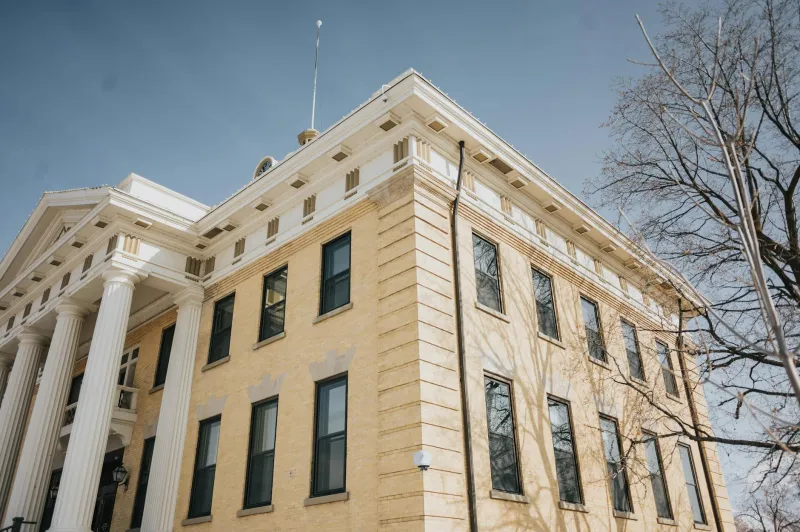
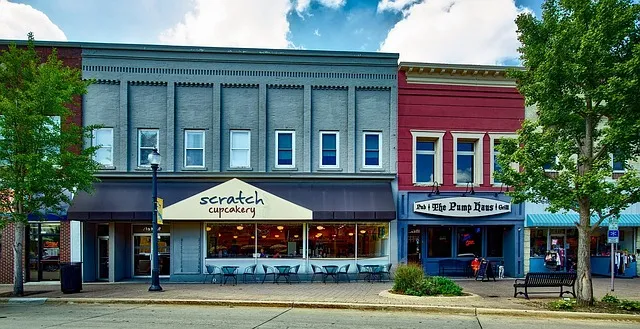 Photo: Cedar Falls, Iowa, via cdn.pixabay.com
So the town council did what small-town councils do best: they passed a law. Ordinance 47-B declared that "any person who shall make or cause to be made any loud, raucous, or disturbing noise within the city limits shall be guilty of a misdemeanor."
Sounds reasonable, right? Except nobody bothered to define what constituted "loud, raucous, or disturbing noise."
The Devil in the Details
For decades, Ordinance 47-B worked exactly as intended. Police used common sense. A crying baby wasn't a crime. A drunk singing opera at 3 AM was. The law did its job without anyone reading the fine print.
Then, in 1987, local historian Margaret Thornfield was researching the town's centennial celebration when she stumbled across something peculiar. According to the letter of the law, any noise that could "disturb" someone was technically illegal. And since whistling could theoretically disturb someone—say, a person with misophonia or a very grumpy neighbor—whistling was technically a criminal offense.
 Photo: Margaret Thornfield, via m.media-amazon.com
So was humming. Singing in the shower. Sneezing too loudly. Even applauding at the high school football game.
"I called the mayor immediately," Thornfield recalls. "I said, 'Bob, did you know you're technically a criminal every time you whistle while you work?'"
The Bureaucratic Trap
Mayor Bob Patterson's first instinct was to fix the ordinance immediately. How hard could it be to add a few clarifying words?
Very hard, as it turned out.
Under Iowa municipal law, repealing or modifying any ordinance requires three separate city council meetings, public notice in the local newspaper for four consecutive weeks, a public hearing, and a two-thirds majority vote. The process costs roughly $2,000 in administrative fees and legal review.
For a town whose annual budget barely covered snow removal, spending two grand to make whistling legal again seemed absurd.
"We figured we'd just leave it alone," Patterson explains. "It's not like we were actually going to arrest people for whistling."
The Unintended Consequences
But word got out, as word tends to do in small towns. The story hit the Cedar Falls Gazette, then the Des Moines Register, then the Associated Press. Suddenly, Cedar Falls was famous for being the town where whistling was illegal.
Tourists started showing up. Not many—this was Iowa, after all—but enough to notice. They'd walk down Main Street, whistle loudly, and dare the police to arrest them. Local teenagers turned public whistling into an act of civil disobedience.
Police Chief Danny Morrison found himself in the bizarre position of having to ignore his own town's laws. "What was I supposed to do, arrest half the high school marching band?"
The Legal Loophole That Became Local Legend
The situation became even more surreal in 1994 when the American Civil Liberties Union caught wind of the story. They threatened to challenge the ordinance as unconstitutionally vague, which would have forced the town into expensive litigation.
The city's attorney found an elegant solution: selective enforcement. Since the police had complete discretion over which laws to enforce, they could simply choose never to enforce the anti-whistling provision. Technically, the law remained on the books, but practically, it was dead letter.
This satisfied the ACLU and saved the town money. It also created a peculiar legal paradox where Cedar Falls residents could commit a crime dozens of times per day without fear of prosecution.
The Modern Legacy
Today, Ordinance 47-B remains unchanged. The current mayor, Sarah Chen, estimates it would cost nearly $5,000 to properly revise the law due to inflation and new legal requirements.
"We've got potholes to fill and a water main that's held together with prayers," Chen says. "Spending five thousand dollars to make whistling legal isn't exactly a budget priority."
The town has embraced its accidental notoriety. The annual Corn Festival now features a "Whistling Contest"—technically a gathering of municipal lawbreakers. Local businesses sell t-shirts reading "I Committed a Crime in Cedar Falls" with a picture of pursed lips.
And every few years, some enterprising journalist rediscovers the story, bringing Cedar Falls another brief moment in the national spotlight.
The Lesson Hidden in Plain Sight
The Cedar Falls whistling ban reveals something profound about American governance: sometimes the most absurd laws persist not because anyone wants them, but because fixing them costs more than ignoring them.
Across the country, thousands of similar ordinances gather dust in municipal code books. Laws against wearing hats in theaters. Regulations requiring horses to wear pants. Prohibitions on eating ice cream on Sundays.
They survive because small-town bureaucracy moves slowly, legal processes cost money, and common sense usually prevails over literal interpretation.
In Cedar Falls, you can still whistle while you work. You'll just be a criminal while you do it.
And somehow, that seems perfectly American.