When a Bridge Fight Turned a Vermont Village Into Its Own Country — And Washington Actually Had to Respond
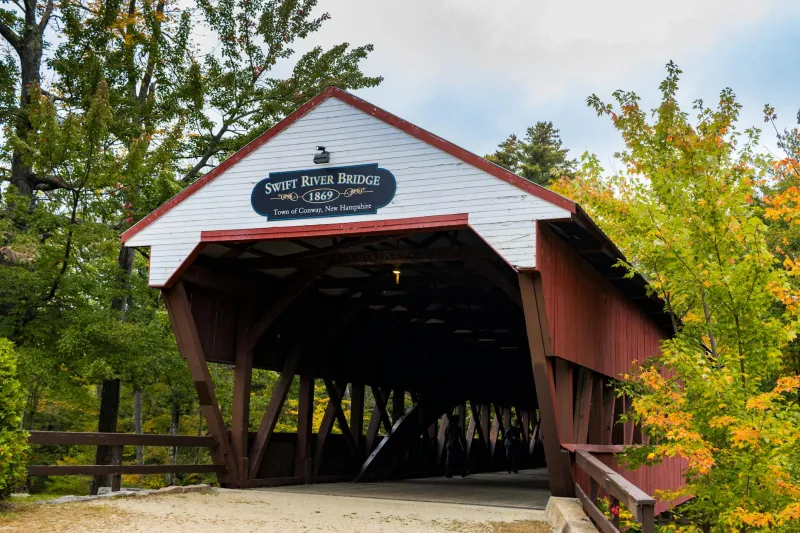
The Bridge That Broke America (Sort Of)
Imagine explaining to your congressman that a handful of residents just declared independence from the United States over a bridge repair bill. Now imagine being that congressman and realizing you have absolutely no idea what to do about it.
Welcome to 1977, when the microscopic community straddling the Vermont-New Hampshire border decided they'd had enough of bureaucratic nonsense and did something that sounds like a Saturday Night Live sketch: they seceded from America.
What makes this story particularly unreal is that it worked. Sort of.
When Local Politics Goes International
The trouble started with something magnificently mundane — a dispute over who should pay to fix a small bridge connecting the two sides of this border community. The bridge was falling apart, both states were pointing fingers at each other about responsibility, and the residents were stuck in the middle watching their only connection literally crumble.
After months of bureaucratic ping-pong between Vermont and New Hampshire officials, the locals had reached their breaking point. But instead of just complaining at town halls like normal people, they decided to get creative.
On July 4, 1977 — because of course it was July 4th — the residents gathered and formally declared their independence from the United States, christening their new nation "Freel Town." The name was a play on "free," but it might as well have stood for "fed up beyond all reason."
A Constitution, Passports, and Diplomatic Immunity
Here's where the story shifts from small-town protest to legitimate diplomatic headache: these weren't just angry people waving signs. They went full nation-state.
The newly minted citizens of Freel Town drafted an actual constitution. They designed and printed official-looking passports. They established a government structure complete with elected officials. They even claimed diplomatic immunity from U.S. law enforcement.
What started as a publicity stunt to shame two state governments into fixing a bridge had morphed into something that looked suspiciously like actual secession. And that's when things got complicated.
The Problem Nobody Saw Coming
Turns out, the U.S. legal system isn't great at handling joke countries that might not be entirely joking. While the residents of Freel Town were clearly making a point rather than launching a serious independence movement, the federal government couldn't just ignore it.
Why? Because American law has some fascinating gaps when it comes to secession. The Civil War established that states can't unilaterally leave the Union, but what about communities that aren't technically states? What about groups of people who declare independence but don't actually try to enforce it militarily?
Legal scholars started scratching their heads. Federal officials found themselves in the absurd position of having to take seriously a "nation" that existed primarily to prove a point about bridge maintenance.
When Congress Gets Involved in Bridge Drama
The situation became even more surreal when Freel Town's "diplomatic mission" — basically residents with homemade passports — actually managed to get meetings with federal officials. They presented their case not as angry constituents, but as representatives of a foreign nation seeking recognition.
Congressional staffers found themselves fielding calls about this microscopic "country" that had somehow made national news. The story was too weird to ignore and too legally ambiguous to dismiss.
The federal response was a masterpiece of bureaucratic confusion. Officials couldn't acknowledge Freel Town's independence without setting a dangerous precedent, but they also couldn't completely ignore a situation that was generating genuine legal questions about American sovereignty.
The Resolution That Wasn't
Eventually, cooler heads prevailed — sort of. The bridge got fixed (though accounts vary on exactly who paid for it), and Freel Town quietly dissolved itself back into the United States. The passports became collector's items, the constitution became a historical curiosity, and life returned to normal.
But the episode left behind some uncomfortable questions. If a group of Americans can declare independence, draft a constitution, and force federal attention without anyone knowing exactly how to respond, what does that say about the gaps in our legal system?
The Unreal Reality of American Law
The Freel Town incident reveals something genuinely bizarre about American governance: we've built a system so focused on big-picture constitutional questions that we sometimes miss the absurd edge cases.
No one had ever seriously considered what happens when a few dozen people decide to peacefully secede over infrastructure disputes. The founders probably never imagined a scenario where citizens would use the tools of nationhood as a form of protest against bad governance.
Yet that's exactly what happened, and for a brief moment in 1977, America had to grapple with the diplomatic recognition of a country that existed primarily to make everyone involved feel silly about a bridge.
The most unreal part? It actually worked. The bridge got fixed, the dispute got resolved, and a handful of Vermont and New Hampshire residents proved that sometimes the most effective way to deal with government bureaucracy is to temporarily stop being governed by it.
Today, there's no trace of Freel Town except in history books and the memories of people who lived through America's strangest secession crisis. But somewhere in congressional archives, there are probably still memos about how to handle the next time Americans decide to solve local problems by founding their own countries.
Because in America, apparently, that's always a possibility.