Putting Out a Bucket in the Rain Was Illegal — And Colorado Had the Receipts to Prove It
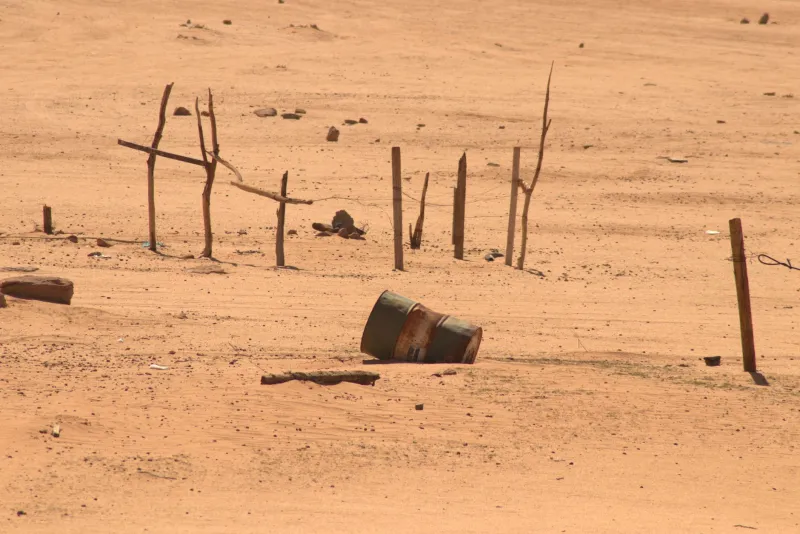
The Crime of Catching Rain
Imagine setting a bucket outside during a thunderstorm and getting a knock on the door from a state official telling you to pour it out. It sounds like a punchline. In Colorado, for most of the last century and a half, it was policy.
The legal concept at the center of this story is called prior appropriation, and it is one of the most aggressive property rights doctrines ever written into American law. Under its logic, water doesn't belong to the person on whose land it falls. It belongs — in a legally enforceable sense — to whoever filed the first claim on that water source, often decades or even a century earlier. And in some interpretations, that ownership begins before the water touches the ground.
Which means the rain falling on your roof, in certain western states, was never legally yours to keep.
Where the Law Came From
To understand prior appropriation, you have to go back to the 1850s and 1860s, when miners and settlers were flooding into the arid American West and immediately running into a problem that the Eastern legal tradition wasn't built to solve: there wasn't enough water.
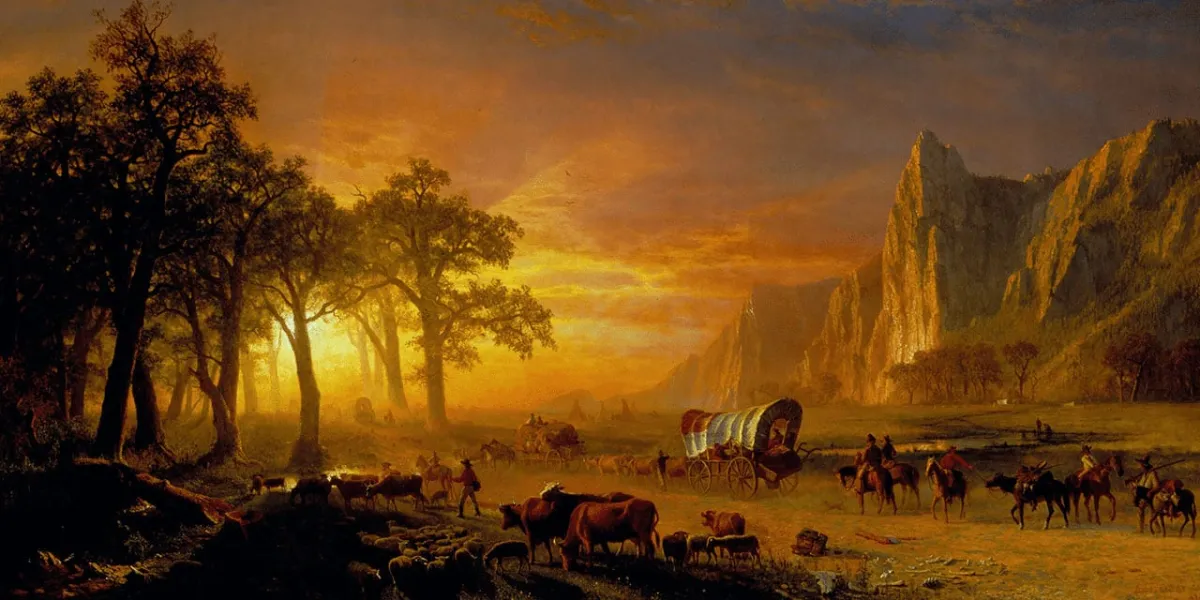 Photo: American West, via nationalcowboymuseum.org
In the East, water law followed the riparian doctrine — essentially, if your land bordered a river or stream, you had the right to use that water reasonably. It was a system built for a landscape where water was relatively abundant and the main disputes were about how much any one person could take.
The West was different. Rivers were scarce, seasons were brutal, and the difference between having water rights and not having them was the difference between a working farm or mine and a dead one. Settlers needed a system that rewarded whoever got there first and put the water to use, regardless of where their land sat relative to the source.
Prior appropriation was that system. First in time, first in right. You filed a claim, you used the water, and that claim followed you — and your heirs, and their heirs — indefinitely. Latecomers had to wait until earlier claimants were fully satisfied, even in drought years when waiting meant losing everything.
It was a brutal, practical solution to a brutal, practical problem. And it worked well enough that Colorado enshrined it in its first state constitution in 1876, making it the foundational principle of all water law in the state.
When the Logic Reached the Sky
Here's where prior appropriation becomes genuinely surreal.
If downstream water rights holders own the water in a river, and that river is fed by snowmelt and rainfall in the mountains upstream, then any water captured before it reaches the river theoretically reduces what the downstream rights holder receives. Follow that logic far enough and you arrive at a conclusion that sounds insane but is legally coherent within the framework: even rainwater falling on private land, if it would eventually flow into a claimed waterway, belongs in part to the downstream rights holder.
Colorado water law didn't just imply this. It effectively codified it. For most of the 20th century, collecting rainwater in Colorado — even in a barrel on your own property — was technically illegal without a water rights permit. The state's position was that precipitation falling within its borders was part of the prior appropriation system from the moment it hit the ground, and intercepting it without authorization was a form of theft from those with senior water claims.
This wasn't theoretical. The state actively discouraged rainwater collection and, in documented cases, prosecuted or threatened prosecution of landowners who set up collection systems on their own property.
The Cases That Made It Real
In the early 2000s, the issue moved from legal abstraction into the news cycle when several Colorado residents were cited or investigated for rainwater harvesting. One case involved a property owner who had installed a modest collection system to water a garden — the kind of setup that in most of the country would be considered an environmentally responsible choice and nothing more.
Colorado officials, citing the prior appropriation doctrine, informed him that the water he was catching was not his to catch. The downstream rights that had been filed on the relevant watershed predated his land ownership by decades. The rain was spoken for.
The story attracted national attention partly because of its inherent absurdity — here was a man being told by his state government that he was stealing water from the sky — and partly because it illuminated just how far the frontier-era logic of prior appropriation had extended into the modern world.
Environmental advocates had been making this argument for years: a law designed to encourage maximum water use in the 19th century was now actively punishing conservation in the 21st.
The Slow, Partial Reform
Colorado eventually blinked. In 2009, the state passed legislation allowing residents to collect limited amounts of rainwater — up to 110 gallons across two containers — for outdoor use. It was a narrow exception carved out of a still-intact legal framework, and it came with conditions: the water had to be used on the same property where it was collected, and only for outdoor purposes.
The law didn't go away. It bent, slightly, under enough public pressure that the image of prosecuting someone for catching rain became too embarrassing to defend. But the underlying doctrine — that water rights in Colorado are a finite, historically allocated resource that prior appropriation controls absolutely — remained completely intact.
And Colorado isn't alone. Utah, until 2010, prohibited rainwater collection entirely. Several other western states still restrict it significantly. The rules vary by state, by watershed, and by the specific terms of water rights filings that in some cases date back to the Grant administration.
A Law That Outlived Its World
What makes this story genuinely strange isn't that a bad law existed — bad laws exist everywhere. It's that a law written for a specific, desperate moment in frontier history quietly survived long enough to criminalize one of the most instinctive human acts imaginable.
People have been collecting rainwater since before recorded history. Cisterns, barrels, and catch basins are among the oldest technologies humanity ever developed. In much of the world, rainwater harvesting is actively encouraged as a sustainable practice that reduces strain on municipal water systems.
In Colorado, for the better part of 150 years, it was something you could be prosecuted for.
The bucket was real. The law was real. And somewhere in the Colorado Rockies, there are still water rights filings that technically own the rain before it lands.
 Photo: Colorado Rockies, via wallpapers.com