A Museum Donated a Stolen Painting Back to Itself — and Got a Tax Receipt for the Trouble

The Donation That Was Too Good to Be True — for Reasons Nobody Expected
Art donations are a staple of American museum culture. Wealthy collectors acquire pieces over a lifetime, and when the time comes, they gift them to institutions — claiming a charitable tax deduction and securing a kind of immortality by attaching their name to a gallery wall. It's a system that works smoothly, built on trust, documentation, and the assumption that everyone involved knows what they're looking at.
Which is why what happened at one prominent American museum is so spectacularly strange. A private collector donated a painting to the institution in a gesture of genuine goodwill. The museum accepted it gratefully, issued the appropriate tax documentation, and added the work to its collection.
The painting had been stolen from that same museum decades earlier. The donor had no idea. The museum had no idea. And for a brief, glorious moment, an art institution formally thanked a private citizen for returning something that had never been theirs to give.
How a Painting Disappears Without Anyone Noticing
The theft itself — and this is where the story starts to feel almost architectural in its irony — wasn't a dramatic heist. There was no laser grid, no midnight rappelling, no clever distraction involving a crowd of tourists. The painting simply vanished from the museum's inventory at some point, and the loss was either not detected or not escalated in a way that triggered a serious search.
This kind of quiet disappearance is more common in the art world than most people realize. Museum collections, particularly in the mid-20th century, were often managed with cataloging systems that were, to put it charitably, inconsistent. Pieces moved between storage and display, between institutions on loan, between departments during renovation — and sometimes a work would slip through the gaps in the paperwork without triggering an alarm.
In this case, the painting left the museum's physical possession and, at some point, left its records entirely. Whether it was stolen by a staff member, walked out during a period of lax security, or disappeared during a transfer, the result was the same: the work entered the private market without anyone formally raising a flag.
The Journey Through Legitimate Hands
Once a stolen artwork enters the private market without being flagged, it can travel a surprisingly clean path. It gets bought and sold by people who have no reason to suspect anything is wrong. Provenance documentation — the paper trail that tracks a work's ownership history — can be partial, especially for pieces acquired decades ago when record-keeping was less rigorous.
The painting moved through a chain of private ownership over the years, each transaction appearing legitimate to the parties involved. Galleries, private collectors, and estate sales all played a role at various points. At no stage did anyone cross-reference the work against stolen art databases, which in the mid-20th century were far less comprehensive than they are today. The Art Loss Register, the most widely used database for tracking stolen works, wasn't even established until 1991.
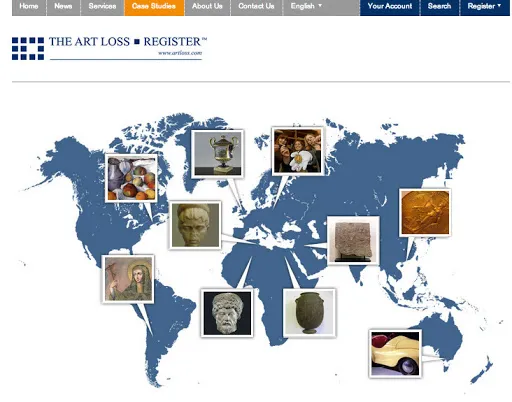 Photo: Art Loss Register, via i0.wp.com
By the time the painting landed in the hands of the eventual donor, it had been circulating in the private art world long enough that its origins were effectively invisible. To the collector, it was simply a piece they had acquired, valued, and eventually decided to pass on to an institution that would care for it properly.
The Donation, the Receipt, and the Revelation
The formal donation went through exactly the way these things are supposed to. The collector contacted the museum, the museum's acquisitions staff reviewed the work, and an appraiser assigned it a fair market value for tax purposes. The museum issued a charitable donation receipt. The collector filed for the deduction. Everyone shook hands.
The discovery that something was deeply, cosmically strange about this transaction came later — and it came the way most great art world revelations come, through a curator who wouldn't stop pulling on a thread.
A staff member reviewing historical inventory records — possibly during a digitization project, possibly during an insurance audit — came across documentation of a work that matched the newly donated painting in description, dimensions, and artist attribution. Cross-referencing the old catalog entry with the newly acquired piece, the curator realized they were looking at the same object.
The museum had just been gifted its own painting.
The Legal and Ethical Tangle
What followed was a situation that required lawyers, art historians, and at least a few people with a strong appreciation for irony.
The tax receipt had to be revisited. A charitable deduction is valid when someone donates something they own to a qualifying institution — but the donor, it turned out, had never actually owned the painting. You cannot legally donate something that was stolen, even if you acquired it in good faith and had no knowledge of its origins. The IRS and the museum's legal team had to work through the implications of a deduction that had been issued for a transfer that was, technically, a return of property.
The donor, by all accounts, cooperated fully once the situation was explained. There was no bad faith involved. The collector had genuinely believed they were making a gift, and the museum had genuinely believed it was receiving one. The absurdity of the situation wasn't anyone's fault — it was the product of decades of fragmented record-keeping, an under-documented theft, and a private art market that moved faster than the systems designed to track it.
What the Story Says About the Art World
Museums across the United States have spent the last few decades aggressively auditing their own collections for works with problematic provenance — pieces looted during World War II, objects removed from archaeological sites without authorization, and yes, works that were stolen and never recovered. The process has turned up surprises at institutions that considered their collections impeccably documented.
 Photo: World War II, via digital-classroom.nma.gov.au
The case of the self-donated painting is an extreme version of a problem the art world has grappled with for generations: the gap between what an institution believes it owns and what its records can actually prove.
In this instance, the gap closed in the most circular way imaginable. The museum got its painting back. The donor got a very complicated tax situation. And somewhere in the administrative record of one American art institution, there is a donation entry that, if you look at it long enough, stops making any kind of sense.
The painting, presumably, is back on the wall — right where it started.