The Mountain Midwife Who Saved 2,000 Lives With Nothing But a Horse and a Medical Bag
The Numbers That Broke Medical Science
In 1925, Mary Breckinridge rode into the mountains of eastern Kentucky with a radical idea: she was going to save mothers and babies in a region where childbirth was essentially a death sentence. What she accomplished over the next three decades defied every statistical model medical researchers could devise.
 Photo: eastern Kentucky, via a.travel-assets.com
 Photo: Mary Breckinridge, via bunny-wp-pullzone-a6bxrid7oy.b-cdn.net
Her team of nurse-midwives, traveling on horseback through some of America's most isolated terrain, delivered 2,017 babies without losing a single mother. In a region where maternal mortality rates reached 15 deaths per 1,000 births, Breckinridge's service recorded zero.
When researchers first reviewed these numbers in the 1950s, many assumed the records were fabricated.
Where Modern Medicine Feared to Tread
The mountains of southeastern Kentucky in the 1920s might as well have been another planet. Families lived in isolated hollows accessible only by horseback or on foot. The nearest hospital was often 100 miles away over treacherous mountain roads. Most residents had never seen a doctor.
Women gave birth attended only by family members or local "granny midwives" whose training consisted entirely of folk wisdom and prayer. Complications that would be routine in a hospital — breech presentations, hemorrhaging, infections — were death sentences.
Maternal mortality rates in the region were among the highest in the industrialized world. For every 1,000 babies born, 15 mothers died. Infant mortality was even worse, with nearly 200 deaths per 1,000 births.
Into this medical wasteland rode Mary Breckinridge, a 44-year-old nurse from a wealthy Kentucky family who had lost two children of her own.
The Impossible Mission
Breckinridge's plan sounded like medical fantasy. She would train a team of nurse-midwives in European birthing techniques, then send them into the mountains on horseback to provide prenatal care and attend births in remote cabins.
They would carry their entire medical practice in saddlebags: sterilized instruments, medications, emergency supplies, and detailed record-keeping materials. They would reach women who had never received any prenatal care and deliver babies in conditions that would horrify modern medical professionals.
Most experts predicted the Frontier Nursing Service would last six months before the harsh realities of mountain medicine destroyed it.
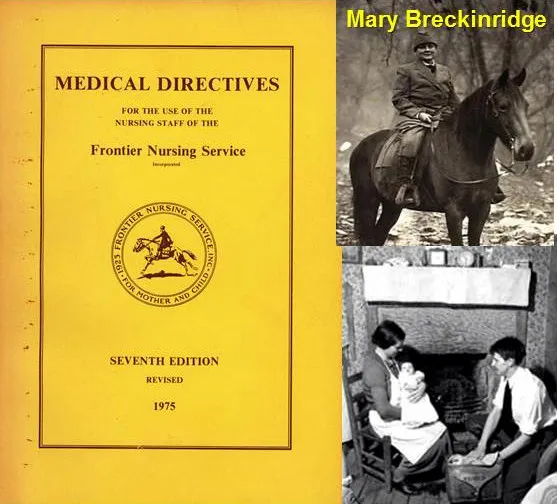 Photo: Frontier Nursing Service, via pahx.org
The Nurses Who Rode Into Legend
Breckinridge recruited her nurses from the best training programs in America and Europe. Many had battlefield experience from World War I. All were expert horsewomen who could navigate mountain trails in any weather.
They established outpost clinics in converted cabins and rode circuits that covered hundreds of square miles. A typical day might involve a 20-mile horseback ride to deliver a baby, followed by another 15-mile trek to check on a new mother, then a final ride home through mountain darkness.
They carried everything they needed for complex medical procedures in leather saddlebags that weighed less than 30 pounds. Their "operating rooms" were often one-room cabins lit by kerosene lamps, with kitchen tables serving as examination surfaces.
The Statistics That Shouldn't Exist
By 1930, the Frontier Nursing Service had delivered over 500 babies without a single maternal death. By 1940, the number reached 1,200. By 1960, they had attended 2,017 births with a maternal mortality rate of zero.
The statistics were so extraordinary that medical journals initially refused to publish them. Researchers demanded independent verification of the records, convinced that such outcomes were mathematically impossible given the conditions.
But the records were meticulous. Each birth was documented in detail, with outcomes tracked for months afterward. Independent audits confirmed what seemed impossible: a group of nurses on horseback had achieved better maternal mortality rates than the best hospitals in America.
The Secret of Mountain Medicine
How did nurses working in primitive conditions achieve results that eluded modern hospitals? The answer lay in their approach to pregnancy and childbirth.
Unlike hospital-based medicine, which treated pregnancy as a medical emergency, the Frontier Nursing Service treated it as a natural process that occasionally needed medical intervention. Their nurses spent months getting to know expectant mothers, providing prenatal care, nutrition counseling, and education.
They identified high-risk pregnancies early and made arrangements for hospital delivery when necessary. They built relationships with families that extended far beyond the delivery room, providing ongoing health care for mothers and children.
Most importantly, they were present for the entire birthing process, not just the final moments. This continuity of care allowed them to spot complications early and respond appropriately.
When Horses Outperformed Hospitals
The Frontier Nursing Service's success rate was so extraordinary that it sparked a national debate about American medical practice. If nurses on horseback could achieve perfect maternal mortality rates in mountain cabins, why were hospital-based doctors losing mothers in modern medical facilities?
The comparison was particularly embarrassing for urban hospitals, where maternal mortality rates remained stubbornly high despite access to the latest medical technology. Critics argued that American medicine had become too focused on intervention and not enough on prevention and continuous care.
Breckinridge's model influenced medical education and hospital practices across the country. Nursing schools began requiring courses in midwifery, and hospitals started emphasizing prenatal care and patient relationships.
The Legacy of the Impossible
Mary Breckinridge died in 1965, but the Frontier Nursing Service continues to operate in eastern Kentucky. Modern practitioners use cars instead of horses and work in partnership with regional hospitals, but they still follow Breckinridge's model of comprehensive, relationship-based care.
Their success rates, while no longer perfect, remain exceptional. In a region where poverty and geographic isolation continue to challenge healthcare delivery, the service maintains maternal and infant mortality rates well below national averages.
The Numbers That Changed Everything
The statistical legacy of Breckinridge's work is staggering. Over 30 years, her nurses delivered 2,017 babies with zero maternal deaths and an infant mortality rate of just 9 per 1,000 births — better than the current national average.
These numbers forced the medical establishment to reconsider fundamental assumptions about childbirth and healthcare delivery. They demonstrated that technology and infrastructure, while important, were less critical than skilled practitioners who understood their patients and their communities.
More importantly, they proved that healthcare could be both high-quality and deeply personal, even in the most challenging circumstances.
The Mountain Miracle That Modern Medicine Still Studies
Today, researchers continue to study the Frontier Nursing Service model, trying to understand how a small group of nurses achieved results that seem impossible by contemporary standards. Their success challenges modern assumptions about healthcare delivery and suggests that sometimes the oldest approaches to medicine are also the most effective.
Mary Breckinridge's achievement stands as one of the most remarkable stories in American medical history: proof that dedication, skill, and genuine care for patients can overcome almost any obstacle — even when your operating room is a mountain cabin and your transportation is a horse named Babette.
In an era when medical errors kill thousands of patients annually in modern hospitals, the perfect record of the Frontier Nursing Service serves as both an inspiration and a challenge. It reminds us that medicine, at its best, is still about one person caring for another — whether that care happens in a gleaming medical center or a one-room cabin lit by lamplight.