The Homeless Man Who Legally Owned the Empire State Building for 90 Minutes
When the System Glitched on the World's Most Famous Building
Andrew Brown had been living in a Manhattan shelter for three months when he discovered something that would make him briefly richer than most small countries: according to New York City's official property records, he owned the Empire State Building.
 Photo: Andrew Brown, via heavy.com
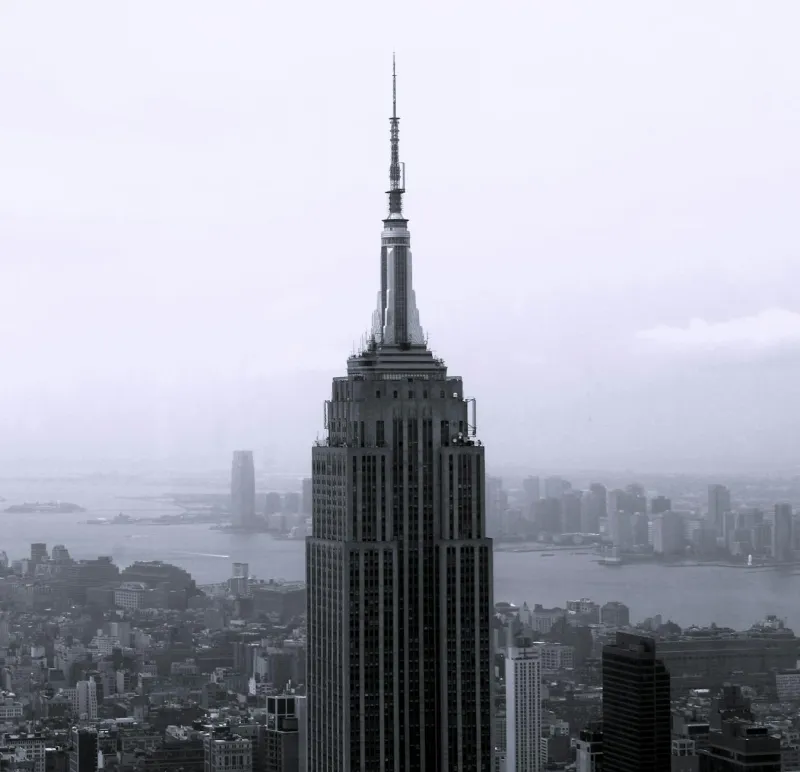
 Photo: Empire State Building, via a.cdn-hotels.com
Not a share of it. Not a lease. The entire 102-story, $2.3 billion Art Deco masterpiece.
The discovery happened purely by accident, during what should have been a routine afternoon at the Department of Finance.
The Paperwork Trail That Led to Nowhere
Brown had been trying to resolve a dispute over unpaid parking tickets when a clerk suggested he check the city's property database to verify his address history. He typed his name into the terminal, expecting to see nothing more than a few rental records.
Instead, the screen displayed something that made both Brown and the clerk stare in stunned silence: "EMPIRE STATE BUILDING - 350 FIFTH AVENUE - OWNER: ANDREW J. BROWN."
The clerk refreshed the screen. The information remained unchanged. She called her supervisor, who called his supervisor, who eventually called the Department of Finance's chief legal counsel.
For the next hour and a half, the most famous building in America officially belonged to a man who had been sleeping in a homeless shelter.
How You Accidentally Steal a Skyscraper
The error traced back to a filing mistake made three weeks earlier during a routine property tax assessment update. A data entry clerk, working through hundreds of property transfers, had accidentally linked Brown's name — which appeared in the system due to his parking ticket case — to the Empire State Building's tax identification number.
Under New York's electronic filing system, that connection automatically generated a property deed transfer record. The system then updated all related databases, including title records, tax assessments, and ownership registrations.
For all practical legal purposes, Andrew Brown had become the rightful owner of one of the world's most valuable pieces of real estate through a typo.
When Lawyers Meet the Impossible
The legal implications were staggering. Property ownership in New York is determined by public records, and those records clearly showed Brown as the building's owner. The mistake had been processed through multiple verification systems, each of which had approved the transfer.
Meanwhile, the building's actual owners — a real estate investment trust worth billions — had no idea their property had been electronically redistributed to a stranger.
City attorneys faced an unprecedented problem: their own systems had created a legal reality that contradicted physical reality. Brown hadn't filed any fraudulent documents or attempted to deceive anyone. The city's computers had simply decided he owned the Empire State Building.
The 90-Minute Empire
Word of the situation spread quickly through City Hall. Within an hour, Brown found himself in a conference room surrounded by lawyers, city officials, and increasingly frantic phone calls to the building's management company.
The surreal nature of the situation wasn't lost on anyone involved. Here was a man who couldn't afford an apartment sitting across from attorneys who were trying to figure out how to legally evict him from owning a skyscraper.
Brown, to his credit, seemed to grasp the absurdity better than anyone. "I guess this means I can finally afford the rent," he told reporters later.
The Emergency That Nobody Planned For
The city's emergency response revealed just how unprepared the system was for its own mistakes. There was no established protocol for reversing erroneous property transfers, especially ones involving buildings worth more than the GDP of small nations.
Legal experts consulted that afternoon suggested the situation might require a court order to resolve. Others argued that the error was so obvious that administrative correction should be sufficient. A few pessimistic voices wondered whether Brown might actually have a legal claim to compensation for the city's mistake.
The building's actual owners, once they learned of the situation, demanded immediate resolution and hinted at lawsuits if the error wasn't corrected quickly.
The Fix That Almost Wasn't
After 90 minutes of increasingly desperate phone calls, a senior database administrator discovered that the original error could be reversed through the same system that had created it. By manually overriding the automated transfer and restoring the previous ownership records, the Empire State Building could be returned to its rightful owners.
The process took exactly seven minutes. One moment Andrew Brown owned a $2.3 billion skyscraper; the next moment he was back to owning nothing but the clothes on his back.
But for those seven minutes, the city's computers showed him collecting roughly $400,000 per minute in theoretical rental income.
The Vulnerability Nobody Wanted to Discuss
The incident exposed a troubling reality about modern property records: they're only as reliable as the people who enter data into them. In an era when billions of dollars in real estate transactions happen electronically, a single typing error had briefly transferred ownership of America's most famous building.
City officials downplayed the significance of the error, calling it an "isolated incident" that wouldn't be repeated. But property law experts pointed out that if such a mistake could happen with the Empire State Building — one of the most closely watched properties in the world — it could happen with any building anywhere.
The Man Who Almost Owned Manhattan
Andrew Brown never attempted to capitalize on his brief ownership of the Empire State Building. He didn't try to sell it, mortgage it, or even visit it during his 90 minutes as its legal owner. Instead, he cooperated fully with city officials to correct the error.
The city, grateful for his cooperation and perhaps slightly embarrassed by the whole situation, helped expedite his housing applications. Within two months, Brown had moved into permanent housing.
He still keeps a printout of the property record showing his name as the building's owner. "Just in case anyone ever asks me what I did with my life," he explains. "I can tell them I once owned the Empire State Building. For about an hour and a half."
The Glitch That Revealed the System
The Empire State Building incident remains one of the most spectacular clerical errors in New York City history. It demonstrated both the efficiency and the fragility of modern record-keeping systems — how quickly they can process information, and how catastrophically they can fail.
More importantly, it showed that in America, property ownership really is just a matter of paperwork. For 90 minutes, Andrew Brown was legitimately, legally, and completely the owner of the Empire State Building, not because he bought it or inherited it, but because a computer said so.
And sometimes, that's all it takes.