A Small-Town Library Burned Down Twice in One Year — and the Government Wasn't Sure the First Fire Counted
Fire departments keep records. Insurance companies keep records. Libraries, of all institutions, are literally in the business of keeping records. So it takes a very particular kind of institutional chaos for a building to burn down, get rebuilt, burn down again, and have government officials scratch their heads wondering whether the first fire was technically real.
And yet.
The Fire That Nobody Wrote Down
Small-town America runs on institutional memory. In communities where the county clerk is also your neighbor's cousin and the city council meets above the hardware store, a lot of local governance happens through informal understanding rather than rigorous documentation. That works fine — until it doesn't.
In the mid-twentieth century, a library serving a small American community suffered a fire significant enough to damage the building and destroy a portion of its collection. It was a local disaster, the kind of thing that gets talked about at the diner for years. Volunteers helped clear the damage. A modest rebuilding effort was organized. The library reopened with some fanfare and a reduced but functional collection.
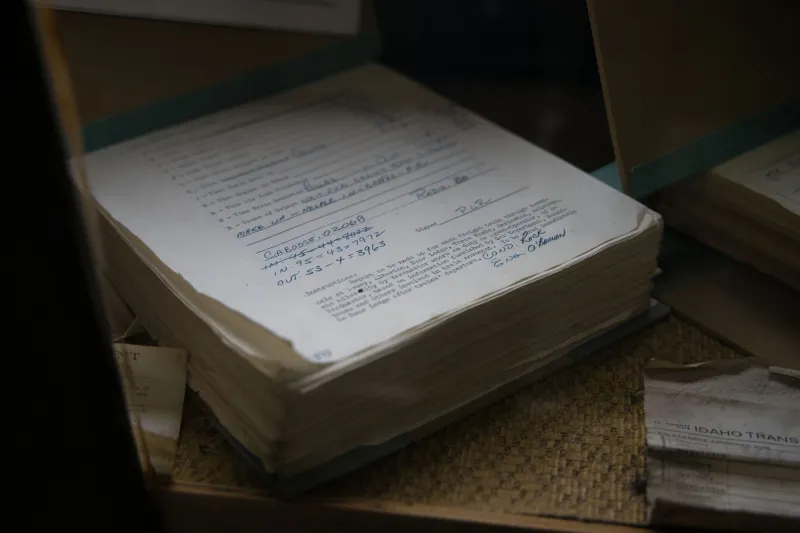
The problem was that almost none of this was formally documented in the way that official records require. There was no insurance claim filed through the proper municipal channels. The fire department's incident report, if one was completed at all, never made it into the county's centralized filing system. The library board — which operated with the organizational rigor of a bake sale committee — kept its own notes, but those notes lived in a filing cabinet inside the library itself.
You can probably guess where this is going.
The Second Fire Finds Nothing to Burn Except the Evidence of the First
Months after the library reopened, it caught fire again. This time, the damage was worse. The rebuilt sections were gutted. The filing cabinet containing the library board's informal records — including whatever notes existed about the first fire — was destroyed.
When officials from the county and state level were called in to assess the situation and process the insurance claim, they ran into a wall. Standard procedure required documentation of the building's history, prior incidents, and any previous claims or damage. There was essentially nothing to find. The official county records showed no fire. No claim. No repair. As far as the paper trail was concerned, the library had been standing undamaged right up until the moment it wasn't.
This created a genuinely absurd bureaucratic situation. Officials weren't disputing that the building was damaged. They were standing in the wreckage. But the question of whether the first fire had "officially" occurred — in the sense of having any legal or administrative existence — became a real procedural sticking point. Without documentation, the first fire existed only in the memories of local residents, which is not a format that insurance adjusters or county administrators find particularly useful.
When an Event Happens and Nobody Files the Paperwork
There's a philosophical puzzle buried in this story that's worth sitting with for a moment. If a library burns down and no one officially records it, did it burn down? The residents of the town would tell you: obviously yes. The scorch marks told you. The missing books told you. The people who showed up with buckets and good intentions told you.
But bureaucratic reality operates on different rules than physical reality. In the world of official records, an event that isn't documented occupies a strange liminal space — it happened, but it has no administrative existence. It can't be referenced, cited, compensated, or built upon. It's real in every meaningful human sense and invisible in every institutional one.
This is not as rare as it sounds. Historians who work with small-town records from the nineteenth and early twentieth centuries encounter this constantly. Events that were common knowledge in a community — a flood, a collapse, a fire — simply don't appear in official archives because no one with the authority to create a permanent record ever got around to it. The event happened. The documentation didn't.
What makes the library story unusual is the timing. The second fire didn't just destroy the building. It destroyed the informal evidence of the first fire almost simultaneously with officials trying to establish whether that first fire existed. It's the kind of coincidence that, if you put it in a novel, an editor would ask you to change because it feels too convenient.
The Aftermath: Rebuilding, Again, With Better Paperwork This Time
The community did eventually rebuild its library a second time. The insurance situation was resolved, though the process was reportedly complicated and slow. Local officials used the incident — both incidents — as a case study in why small municipal institutions needed to maintain off-site records and file incident reports through proper channels even when the informal approach seemed easier.
The library board was restructured. Documentation standards were updated. And the town got its library back.
But the story lingers because of what it reveals about the fragility of institutional memory. We assume that catastrophic events leave marks — in records, in files, in systems. The library that burned twice proved that assumption wrong in the most literal way possible. The first fire left marks on the building. The second fire erased them. And somewhere in between, a community's worst year almost became a year that officially never happened.
The books were gone. The records were gone. And for a strange, uncomfortable moment, the fire that took them was gone too.