The Man the Government Paid for Years — Who Legally Never Worked There

Most people spend their careers trying to prove they exist to their employers. Fill out the right forms, get the right signatures, show up in the right ledger. For one lighthouse keeper stationed along the American coastline in the late nineteenth century, the exact opposite turned out to be his salvation.
He had been doing his job — faithfully, by all accounts — for years. Trimming wicks, logging ships, keeping the light burning through Atlantic storms that would have sent most men scrambling for dry land. He collected his government wages, filed his routine reports, and lived the quiet, essential life of a federal maritime employee.
Then someone in Washington actually looked at the paperwork.
A Paycheck With No Name Behind It
Somewhere between his initial appointment and the bureaucratic machinery that was supposed to record it, something had gone wrong. A clerical error — the kind that happened with exhausting regularity in an era of handwritten ledgers and overworked record-keepers — had simply failed to enter his name into the official federal employment rolls. He had been assigned a post. He had been given duties. He had been paid.
But according to the official record of the United States government, he had never been hired.
This distinction might sound trivial. In practice, it was anything but. Federal employment in the 1800s carried with it a web of legal standing — the right to receive wages, the right to occupy government property, the right to exist within the machinery of the state as a recognized participant. Without a proper entry in the rolls, he occupied a strange legal limbo: present in every practical sense, invisible in every official one.
For a while, nobody noticed. The paychecks kept arriving. The light kept burning. The ships kept passing safely in the night.
Washington Wants Its Money Back
When the Treasury Department finally caught the discrepancy, its response was entirely predictable for a bureaucracy that had just discovered an irregularity in its own books: it wanted the money back. Every dollar paid to a man who had never been officially employed was, in the government's framing, a mistaken disbursement. An error to be corrected. A debt to be collected.
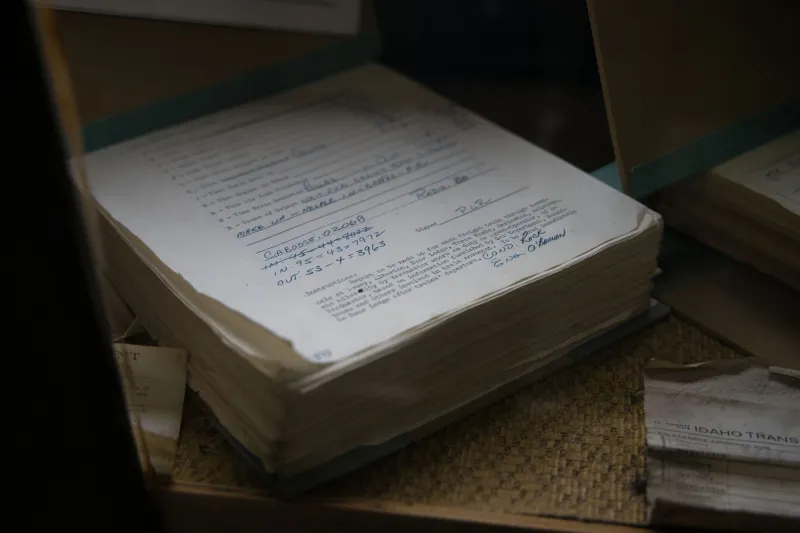
 Photo: Treasury Department, via cloudfront-us-east-2.images.arcpublishing.com
The keeper was informed that he owed the federal government years' worth of wages.
Most men in his position would have scrambled to find witnesses, dig up appointment letters, or petition their supervisors to vouch for them. He took a different approach entirely. Rather than fight to prove he had been legitimately employed, he leaned into the government's own paperwork and argued the opposite.
If the records said he was never hired, then he was never hired. And if he was never hired, then the payments he received were not wages — they were something else entirely. More to the point, if the government had no record of employing him, it had no legal basis to claim an employment relationship had ever existed. You cannot accuse someone of receiving improper wages from a job the government itself refuses to acknowledge they held.
The Bureaucracy Eats Itself
The case that followed was the kind of legal knot that makes law professors genuinely happy. The Treasury Department was essentially arguing two contradictory positions simultaneously: that this man had been a federal employee long enough to accumulate a significant debt to the government, and that he had never been properly entered into federal employment records. The court was not impressed by the tension between those two claims.
The keeper's argument was elegant in its simplicity. The government's own documentation — the very records Treasury was relying upon to establish the scope of the alleged overpayment — confirmed that no valid employment relationship existed. If there was no employment, there was no obligation. If there was no obligation, there was no debt. And if there was no debt, there was nothing to sue over.
He won.
What a Missing Signature Actually Costs
The ruling did not make him famous. Lighthouse keepers rarely did. But the case left behind something more durable than celebrity: a remarkable demonstration of how thoroughly a bureaucratic system can undermine itself when its own records become the evidence against it.
The federal government had, through its own negligence, created a man who existed in physical reality and nowhere else. He worked. He was paid. He performed a genuinely critical public service for years. And yet the moment Washington tried to use the law as a collection tool, it discovered that the law — built entirely on documentation — had no hook to hang the claim on.
There is something almost poetic about it. The lighthouse keeper's entire job was to be seen — to make sure a light was visible from miles away, to guide others safely through the dark. But inside the government's own filing cabinets, he cast no shadow at all.
And in the end, that invisibility was the thing that protected him most.