He Was Mid-Lecture When His Heart Stopped — So He Operated on Himself
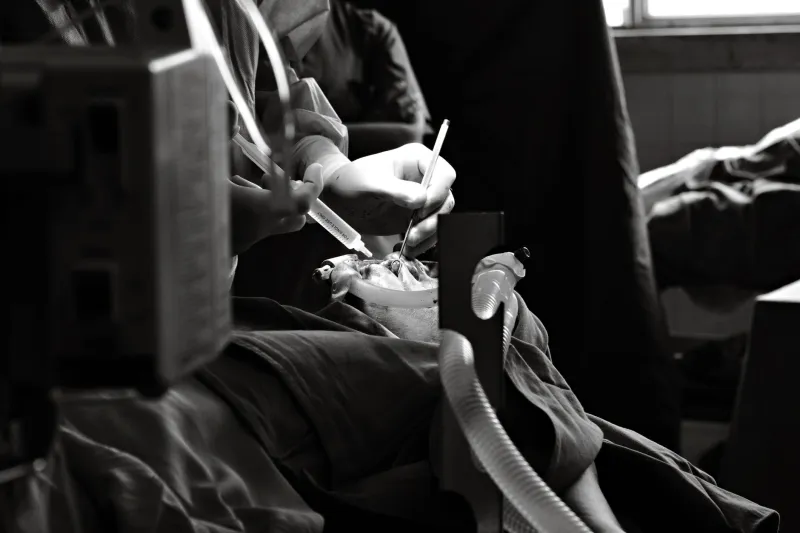
Most people, when they feel their heart seizing up, do one of two things: panic or pass out. Dr. Evan O'Neill Kane did neither. He reached for his instruments.
Before we get to the self-surgery part — because yes, that is exactly what happened — it's worth understanding who Kane was and why this story, as impossible as it sounds, is completely, verifiably true.
The Doctor Who Trusted No One More Than Himself
Evan O'Neill Kane was already a legend in American medicine by the time the 1920s rolled around. He'd been practicing surgery in Kane, Pennsylvania — a town named after his own family — for decades, and he had a reputation for being methodical, unflappable, and, some colleagues quietly noted, a little too confident in his own abilities.
That confidence reached its peak in 1921, when Kane performed the first recorded self-appendectomy in medical history. While sitting in his own operating room, using local anesthesia and a mirror, he removed his own appendix. He was 60 years old. He said he wanted to prove that general anesthesia wasn't always necessary for the procedure. His colleagues were horrified. His patients were fascinated.
But even that story takes a back seat to what happened eleven years later.
The Lecture That Became Something Else Entirely
By 1932, Kane was 71 and still practicing. He had developed a hernia — a fairly routine medical problem — and, in keeping with his established tradition of being his own most willing test subject, he decided to repair it himself. Again. Under local anesthesia. Again.
The self-hernia repair was already a remarkable story on its own. But partway through the procedure, something went wrong that had nothing to do with the hernia.
Kane began experiencing what was almost certainly a cardiac event. His heart, under the stress of the procedure and his age, started behaving in ways that were not compatible with finishing what he had started. Most people in that situation — lying on an operating table, chest open to the air, heart misfiring — would have called for help and hoped for the best.
Kane, by multiple accounts, assessed the situation, communicated what was happening to the medical staff assisting him, and made decisions about his own care in real time. He did not lose consciousness. He did not stop directing the operation. He talked his team through the remainder of the procedure while simultaneously managing his own cardiac symptoms with the cool detachment of a man who had spent fifty years treating other people's emergencies.
He survived. He recovered. He went back to work.
Why This Is More Than Just a Wild Story
It would be easy to frame this as a stunt — the eccentric small-town surgeon who liked to operate on himself for publicity. But that reading misses what makes Kane's story genuinely remarkable from a medical standpoint.
The human body under cardiac stress does not typically cooperate with clear thinking. Oxygen deprivation, pain, and fear create a neurological environment that makes rational decision-making nearly impossible for most people. What Kane demonstrated — whether through sheer willpower, extraordinary physiological resilience, or some combination of both — was a level of self-regulation that modern emergency medicine still struggles to fully explain.
There's also the ethical dimension, which his contemporaries debated at length. A physician treating themselves is, by definition, compromised. The emotional investment alone creates bias. The American Medical Association has long discouraged self-treatment for exactly this reason. And yet Kane's outcomes — in all three of his self-surgeries — were successful. The man who should have been the worst possible doctor for himself turned out to be a pretty decent one.
The Town That Watched It All Happen
Kane, Pennsylvania, the town, had a complicated relationship with its most famous citizen. On one hand, he was a genuine pioneer — a surgeon who brought modern medical techniques to a rural Appalachian community that would otherwise have had limited access to them. On the other hand, he was the kind of doctor who made you wonder whether your own medical care might someday become a personal experiment.
His self-surgeries were reported in newspapers across the country, which treated them with a mixture of awe and barely concealed alarm. The New York Times covered the 1921 appendectomy. Medical journals published case reports. Other surgeons wrote letters expressing admiration and concern in roughly equal measure.
None of them, notably, tried to replicate what he had done.
What It Says About the Limits of Medical Rules
Kane's story sits in a strange space in the history of medicine. He wasn't a fraud, and he wasn't performing for shock value — he genuinely believed that local anesthesia was underused and that self-surgery could demonstrate its viability in ways that traditional clinical trials couldn't. His methods were unconventional, but his reasoning was coherent.
What the cardiac episode added to that story was something no one had planned for: a real-time test of whether a physician could maintain clinical judgment while their own body was actively failing them. Kane passed that test. Whether he should have been in a position to take it is a different question entirely.
He died in 1932, not long after the hernia repair and the cardiac event that accompanied it. He was 73. Cause of death: complications from a broken hip, sustained in a fall. Not, as many people might have expected, anything he had done to himself in an operating room.
Somehow, that feels exactly right.