Nobody Had Ever Written the Rules for This: When a Famous Bridge Quit Being a Bridge and the City Had No Idea What to Do Next
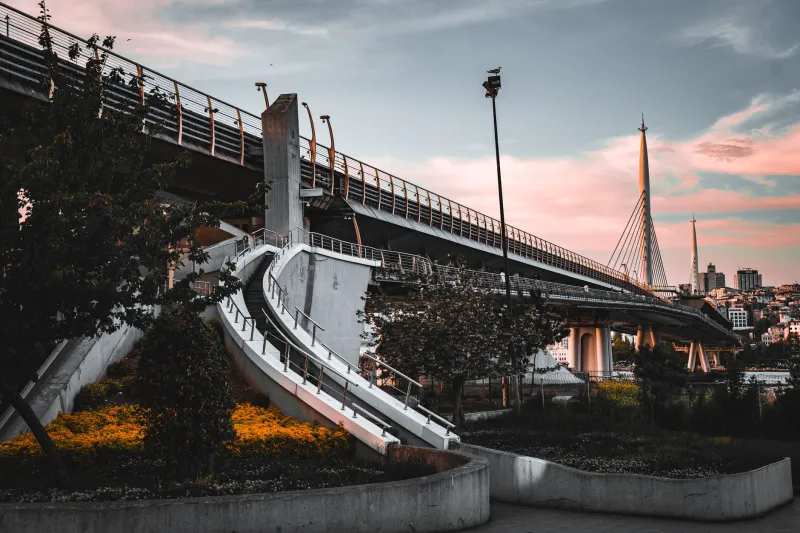
There's a version of this story that sounds like something a philosophy professor would invent to torture undergraduates. If a bridge stops carrying cars, is it still a bridge? And if it isn't a bridge anymore, what is it — and who, exactly, is responsible for it?
New York City answered that question the hard way.
Steel Bones, No Job Description
The High Line wasn't always the Instagram-famous elevated park threading through Manhattan's West Side. For most of the twentieth century, it was a working freight railway — a hulking stretch of steel and concrete that carried meat, dairy, and industrial goods directly into the upper floors of warehouses along the Hudson. It was functional, unglamorous, and entirely necessary.
Then the highway system expanded, trucking got cheaper, and the rail line lost its purpose. By 1980, the last train had run its final stretch. The structure didn't collapse. It didn't disappear. It just sat there, thirty feet above street level, slowly being colonized by wildflowers and scrub trees that nobody had planted.
For almost two decades, the High Line existed in a kind of official limbo. It was privately owned by CSX Transportation, a railroad company that had inherited the structure and wanted nothing more than to demolish it and be done with the whole mess. The city wasn't sure it wanted that either — but it also wasn't sure what else to do with an elevated railway that no longer carried trains.
And here's where it gets genuinely strange.
The Structure That Refused to Have a Category
When community activists and urban planners began seriously pushing to convert the High Line into a public park in the late 1990s, the city's bureaucratic apparatus ran headlong into a problem nobody had anticipated: there were no rules for this.
New York City's zoning code was thorough. It had categories for parks, for railways, for bridges, for commercial corridors, for rooftop gardens, for basically everything a dense urban environment could produce. What it did not have was a category for an elevated former freight railway that a nonprofit wanted to turn into a public greenway.
The structure wasn't a bridge — it didn't span anything in the traditional sense. It wasn't a park — it had no ground-level footprint. It wasn't a building — it had no interior. Every city agency that touched the project had to essentially make up the rules as it went along, then negotiate those improvised rules with every other agency simultaneously.
The Department of Transportation had opinions. So did the Parks Department, the Department of Buildings, the Landmarks Preservation Commission, and a collection of private property owners whose buildings abutted the structure at various points. At one stage, the question of who owned the airspace beneath the elevated park — and whether development rights attached to that airspace could be sold — created a legal sub-debate so convoluted that it required its own set of legal opinions just to frame the question properly.
The Demolition Order That Wouldn't Die
While planners argued about zoning categories, CSX was quietly pursuing a demolition permit. The company had applied to tear the structure down, and for a period in the late 1990s, that permit was genuinely in play. Mayor Rudolph Giuliani's administration supported demolition. The Friends of the High Line — the nonprofit formed specifically to save it — was a scrappy upstart organization with a good idea and very little institutional power.
What saved the structure, at least in part, was a mayoral election. Michael Bloomberg took office in 2002 and backed preservation. But even with political support, the legal untangling took years. The city had to negotiate a transfer of the structure from CSX, work out liability questions for a publicly accessible elevated structure with no historical precedent in city code, and figure out how to classify the thing for tax and maintenance purposes.
At various points, the High Line was simultaneously classified as a railway easement, a potential park property, and an unresolved infrastructure asset — depending on which document you were reading and which agency had produced it.
What They Built When the Rules Finally Caught Up
The first section of the High Line opened in 2009, nearly a decade after serious planning began. By then, the city had essentially written an entirely new regulatory framework around a single structure — a framework that had to account for things like what happens when a building owner wants to expand into the airspace directly adjacent to a public elevated park, or who bears liability when a visitor slips on a section of the old rail track that designers had deliberately preserved as a design feature.
The park is a genuine success story. It draws millions of visitors a year, sparked one of the most dramatic real estate booms in Manhattan's recent history, and became a model that cities from Chicago to Philadelphia began studying for their own abandoned infrastructure.
But the story that doesn't get told often enough is the years of bureaucratic paralysis that preceded the ribbon-cutting. The city's entire regulatory system had been built around a world where things stayed what they were. A bridge was a bridge. A railway was a railway. Nobody had written a contingency plan for the moment a piece of infrastructure simply decided it was done.
Reality, as usual, didn't check the rulebook first.