They Put a Five-Ton Elephant on Trial — Then Hanged Her in Front of a Crowd
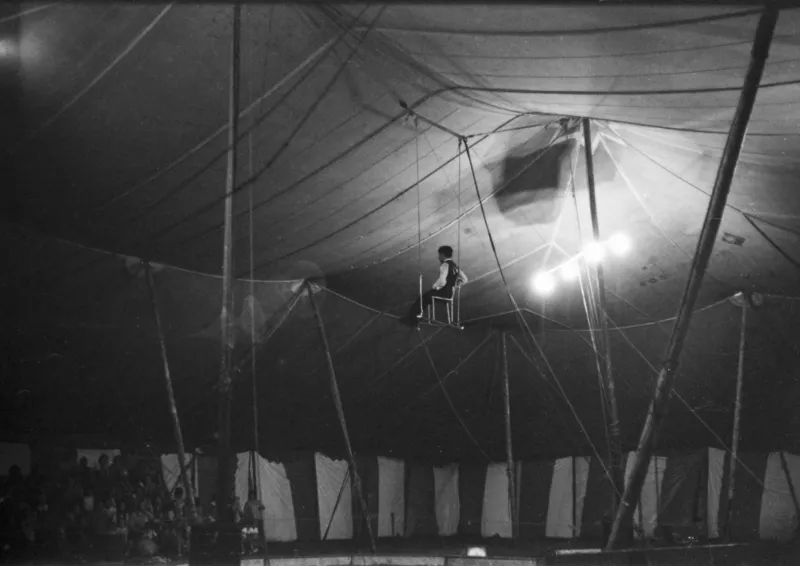
At some point during the afternoon of September 13, 1916, in Erwin, Tennessee, a crowd of several thousand people gathered around an industrial derrick crane at the local rail yard. What they were there to witness was not a construction project.
 Photo: Erwin, Tennessee, via tnecd.com
They were there for an execution.
The condemned was named Mary. She weighed approximately five tons. She was, by all accounts, one of the best-performing elephants in the Sparks World Famous Shows circus — a reliable, crowd-pleasing animal who had been traveling the American South for years.
She was also, depending on who you asked, either a dangerous killer or a traumatized creature who had been pushed past her limits by a negligent handler. The question of which version was true didn't get a fair hearing. In the fall of 1916, in the mountains of East Tennessee, the answer had already been decided before anyone asked the question.
What Happened in Kingsport
The circus had rolled into Kingsport, Tennessee, on September 12th — a small town that, like many in the region, greeted traveling shows with genuine excitement. Mary had made the trip dozens of times before. She knew the routine.
 Photo: Kingsport, Tennessee, via assets.rebelmouse.io
What she apparently didn't know was her new handler. The man assigned to work with her that day was a drifter named Red Eldridge, who had been hired just days earlier with essentially no experience handling large animals. By most accounts, he was doing his best. By most accounts, that wasn't enough.
Exactly what triggered the incident is disputed. Some witnesses said Eldridge prodded Mary with a hook near a sensitive spot behind her ear. Others said she simply reached for a piece of watermelon rind on the ground and he yanked her away too hard. Whatever the specific cause, Mary turned on him, threw him to the ground, and crushed his head with her foot.
Eldridge died on the spot. The crowd scattered. The circus was left with a very large, very immediate problem.
The Sentence Before the Trial
Here is where the story pivots from tragedy to something stranger.
Within hours, the towns surrounding Kingsport began issuing what amounted to informal bans on the Sparks circus — specifically, any circus that included Mary. The threat was blunt: bring that elephant here and we won't let you set up. The circus owner, Charlie Sparks, found himself fielding ultimatums from multiple directions simultaneously.
Local officials in several communities went further. There were genuine discussions — documented in newspaper accounts from the time — about whether Mary should face some form of legal reckoning. The language used was explicitly judicial. Words like trial, verdict, and sentence appeared in coverage that treated the question of elephant culpability with complete seriousness.
Nobody, apparently, paused to note the obvious problem with prosecuting an elephant.
The informal consensus that emerged from these discussions wasn't a formal conviction in any court of law. But it functioned like one. Mary had killed a man. Mary needed to die. The how was the only open question.
The Problem of Killing an Elephant
This is the part that reveals how genuinely improvised the whole affair was.
Shooting Mary was attempted first. A local blacksmith fired into her hide with a high-powered rifle. The bullets didn't penetrate deeply enough to be lethal — elephant hide is not like other hide — and succeeded mainly in enraging her and terrifying everyone nearby. Electrocution was considered and rejected as impractical given the available equipment.
That left hanging.
The industrial derrick crane at the Clinchfield Railroad yard in Erwin was selected as the mechanism. A chain was fashioned into a makeshift noose. Mary was led to the site on September 13th, the chain was secured around her neck, and the crane lifted her.
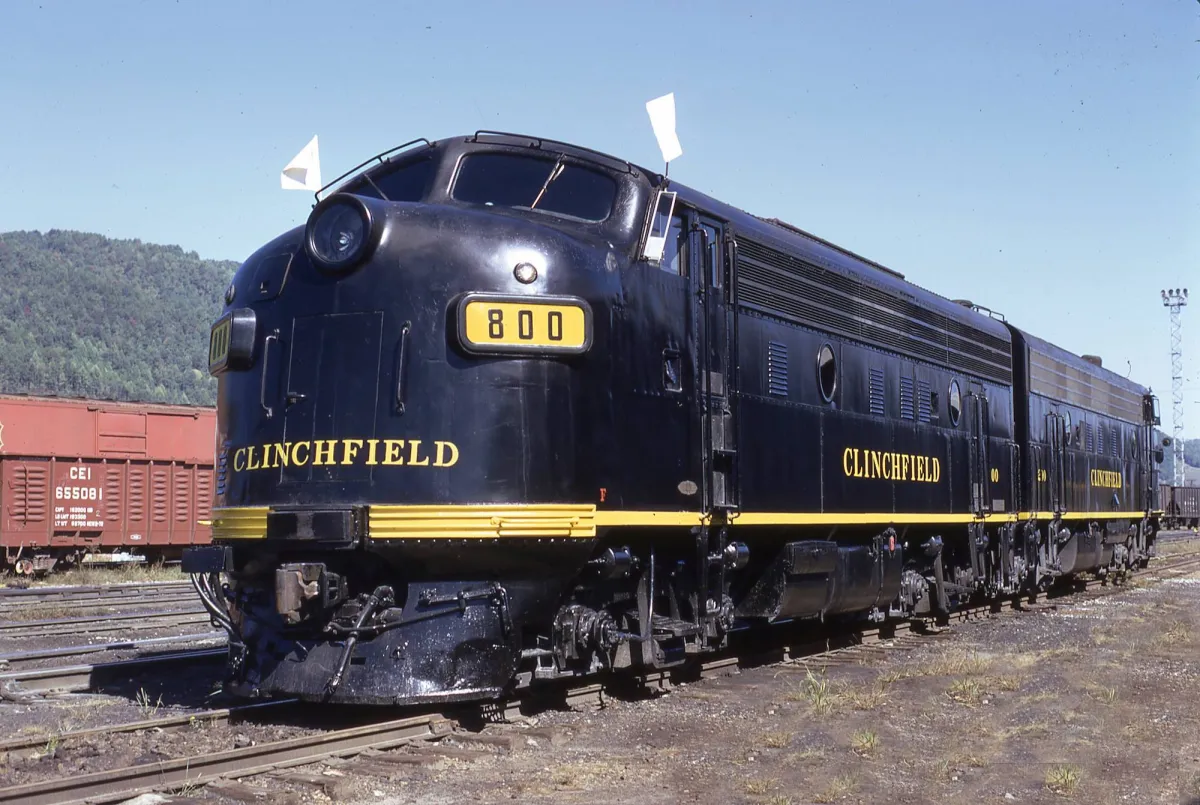 Photo: Clinchfield Railroad, via www.american-rails.com
The first attempt failed. The chain broke, Mary fell, and her hip was fractured. A second chain was secured and the process was completed.
The crowd of spectators — estimates range from two thousand to five thousand — watched the entire thing. Photographs were taken. Some of those photographs still exist.
The Patchwork of Elephant Policy
What followed Mary's death was, in its own way, just as strange as the execution itself.
The informal bans that had been issued before her death didn't simply dissolve once she was gone. Several towns in the region maintained their positions — refusing to host circuses that traveled with large animals, or adding specific conditions around elephant performances that had never existed before. The episode had activated something in local governance that didn't easily switch off.
For a stretch of years in parts of East Tennessee and neighboring areas, there existed a genuinely inconsistent patchwork of elephant-related municipal attitudes. Some towns welcomed circus elephants without question. Others required special assurances. A few simply said no, citing Mary's case as precedent.
None of this was codified into actual law. It was the kind of informal community policy that exists in the space between official ordinance and neighborhood reputation — real enough to affect behavior, loose enough to never be formally challenged.
The Question That Nobody Really Answered
The deeper issue that Mary's case raised — and that nobody in 1916 was particularly equipped to address — is whether an animal can be guilty of anything at all.
Modern animal behavior science would look at the Kingsport incident and see a stressed, possibly injured elephant being mishandled by an inexperienced keeper, responding in the only way available to her. The concept of criminal intent — the foundation of any serious legal proceeding — simply doesn't apply to an elephant reacting to pain or provocation.
But in 1916, the framework being applied was essentially the same one used for human defendants: something bad happened, someone was responsible, and responsibility required punishment. The fact that the someone was a five-ton circus animal didn't seem to complicate the logic for the people making the decisions.
Mary never got a lawyer. She never got to present a defense. She never got a judge who might have pointed out the conceptual absurdity of the proceedings.
She got a chain and a crane and a crowd of thousands.
And somewhere in the gap between what happened and what was called justice, the story of Mary the elephant became one of those true American episodes that sounds completely invented — right up until you see the photographs.