He Walked Into His Own Memorial Service — And the Army Still Insisted He Was Dead
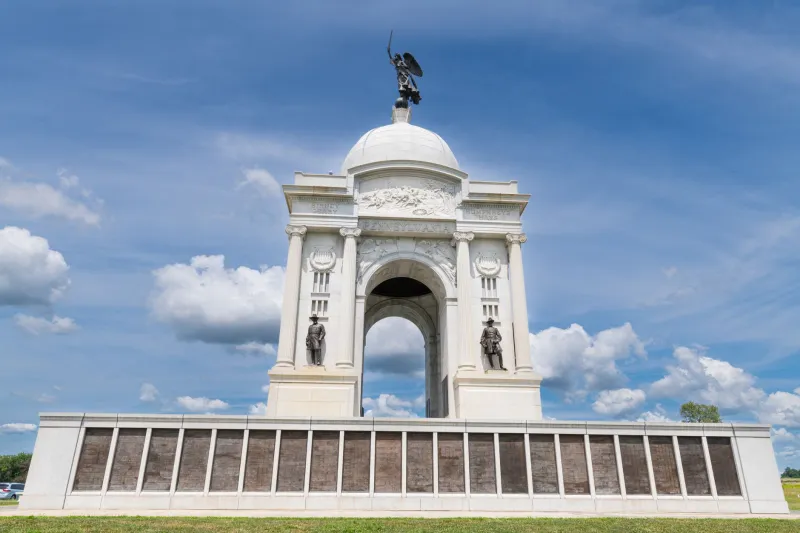
The Name on the Stone
There is something deeply unsettling about the idea of standing in front of your own grave. Most of us will never experience it. But for at least one Union soldier who survived the Battle of Gettysburg, that moment arrived at a veterans' reunion decades after the war ended — and the bureaucratic fallout that followed was almost as strange as the encounter itself.
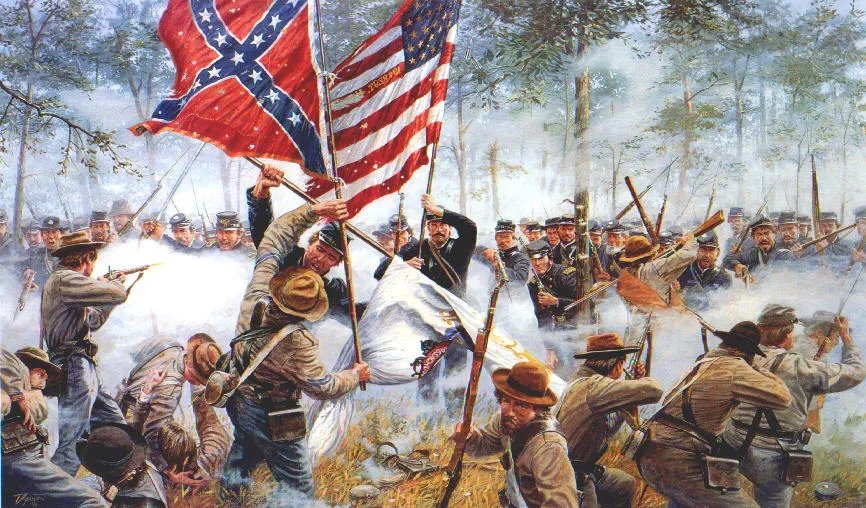 Photo: Battle of Gettysburg, via 4.bp.blogspot.com
The man had been listed as killed in action. His name had been processed through the grim machinery of Civil War record-keeping, entered into ledgers, and eventually memorialized. A marker had been placed. Somewhere, a family had grieved. And meanwhile, the man himself had walked away from the war, settled in another state, built a life under a name that was just different enough to avoid recognition, and spent the better part of his remaining years pretending that a version of himself had died on that Pennsylvania field.
Then he showed up at the reunion.
How the Civil War Lost Track of Its Own Dead
To appreciate how a living man ends up officially dead for fifty years, you need to understand what Civil War record-keeping actually looked like in the chaos immediately following a major engagement.
Gettysburg, fought over three days in July 1863, produced roughly 51,000 casualties between both sides. Union commanders, in the aftermath, were working from incomplete muster rolls, eyewitness accounts of varying reliability, and the physical impossibility of confirming the fate of every single soldier in the confusion of a battlefield that had just seen three days of close-range fighting.
Soldiers were listed as killed based on reports from fellow soldiers, officers who witnessed them fall, or simply the fact that they never reported back to their unit. In the noise and horror of the post-battle accounting, a man who was wounded badly enough to be separated from his unit, who was treated by a field hospital with no communication back to his regiment, or who simply decided — for whatever personal reason — not to return, could easily become a name on a casualty list.
The records weren't malicious. They were overwhelmed.
A Different Name, A Different Life
What drove this particular soldier to disappear isn't something the historical record makes entirely clear — and that ambiguity is part of what makes the story so compelling. Desertion carried the death penalty during the Civil War, though enforcement was inconsistent. Some men simply couldn't go back. Some had been so profoundly broken by what they'd seen that returning to civilian life under any name felt like the only survivable option.
Whatever the reason, he rebuilt. He moved west or south, depending on the account. He took work. He married, in at least some versions of the story. He became a neighbor, a community member, a person with a daily life that had almost nothing to do with the fields of Pennsylvania.
For decades, it held. The country was large and the records were paper. There was no photograph attached to his casualty listing, no fingerprint, no centralized database to cross-reference a name change. He was, for all practical purposes, a new person.
Until the reunions started.
The Reunion Circuit and Its Unexpected Hazards
In the decades following the Civil War, veterans' reunions became a significant cultural institution. Survivors returned to the battlefields, shook hands with men they hadn't seen since the shooting stopped, and participated in the collective work of memorializing what they'd lived through. Gettysburg, as the war's most iconic engagement, drew enormous gatherings — including, by the time the 50th anniversary approached in 1913, men who were well into their seventies and eighties.
For a man who had spent fifty years being dead, the reunion circuit presented an obvious risk. And at some point, that risk materialized.
Accounts vary on exactly how the recognition happened — whether he was spotted by a former comrade, whether he introduced himself carelessly, or whether he simply stood too long in front of the wrong memorial marker and someone noticed the living man matched the name on the stone. However it unfolded, the collision between his official death and his obvious aliveness became impossible to ignore.
The Bureaucracy of Being Alive
What followed was, in its own way, as remarkable as the survival story itself.
Military records in the post-Civil War era were not designed to accommodate resurrection. The pension system, the casualty rolls, the regimental histories — all of it had been finalized, printed, and in some cases literally carved into stone. Correcting a death record required navigating a bureaucratic apparatus that was far more comfortable processing deaths than undoing them.
The soldier faced questions that no living person should have to answer: prove you are who you say you are. Prove you were there. Prove the man on the casualty list is you, and not some other man who happened to share your name and regiment. The government's position, in its most absurd form, was essentially: we have records indicating you died, and your being here does not automatically override our records.
It echoes a pattern that surfaces throughout American legal history — the frustrating tendency of official documentation to outlast the reality it was meant to describe.
A Man Correcting His Own Obituary
There's a particular kind of surreal dignity in what this soldier did at that reunion. He didn't have to come. He had successfully disappeared for half a century. He could have kept going.
Instead, he stood in front of his own memorial and said, essentially: I'm still here. The record is wrong. I was there, and I survived, and I have been alive this entire time while you were busy honoring my absence.
Whether the records were ever fully corrected, whether he received any acknowledgment or compensation, whether history ultimately filed him under "living" or left him in the casualty column — those details are murky, which is itself a kind of answer.
Sometimes the paperwork wins. Even when the man is standing right there.