He Came Home From the War to Find His Own Funeral Had Already Happened
The Letter That Arrived Before He Did
Most soldiers returning from World War II came home to celebrations — parades, home-cooked meals, families who had spent years waiting by the door. One American serviceman came home to something considerably more complicated: the legal and emotional wreckage of his own death.
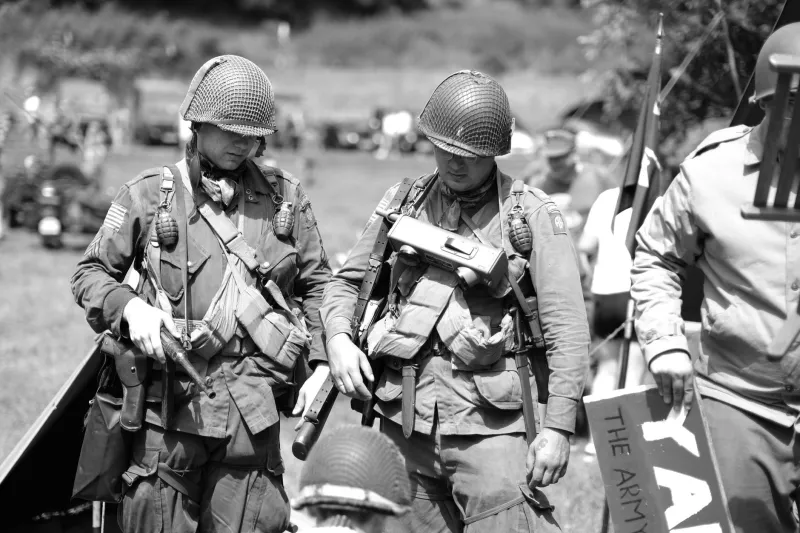
 Photo: World War II, via static.vecteezy.com
He had been declared killed in action. His family had received the official notification. Benefits had been paid. His estate had been processed and closed. Somewhere, possibly in a military cemetery or a hometown churchyard, a headstone carried his name and a date of death that turned out to be entirely fictional.
The man himself was alive — exhausted, malnourished, and very much present — but as far as the United States government was concerned, he had ceased to exist.
Missing in Action, Alive in a Camp
The path from living soldier to officially deceased civilian followed a tragically common wartime logic. He had gone missing during combat operations, which in the chaos of World War II meant one thing to military record-keepers: probable death. After the required waiting period elapsed without confirmation of his survival, the military did what it was procedurally required to do. It closed his file.
What the paperwork didn't account for was that he was sitting in a prisoner of war camp, alive and waiting for the war to end.
POW camps during World War II were not exactly well-connected to Allied military bureaucracy. Notification systems were inconsistent, Red Cross communications were delayed or intercepted, and the machinery of wartime record-keeping was grinding through millions of cases simultaneously. A missing soldier who couldn't be confirmed alive was, for administrative purposes, gone.
So while his family grieved and the government processed his death benefits, he was surviving — which, given POW camp conditions, was its own daily battle.
Coming Home to a Closed File
When the war ended and he was liberated, the immediate chaos of repatriation meant that individual soldiers were being processed en masse. He came home. He walked through the door. His family, understandably, experienced a kind of joy that probably defies description.
And then the paperwork caught up with him.
His bank accounts, to the extent they existed, had been handled as part of his estate. Death benefits had been paid out. In the eyes of every government database that mattered, he was not a returning veteran — he was a dead man who had somehow shown up in his own living room.
The Social Security Administration didn't know he was alive. The military's personnel records listed him as deceased. Any legal or financial standing he had possessed before the war had been administratively dismantled in his absence.
Proving You Exist Is Harder Than It Sounds
What followed was a bureaucratic ordeal that would have been darkly funny if it weren't happening to a real person who had just survived years of captivity.
To reclaim his legal identity, he had to actively prove he was not dead. This required navigating a government apparatus that had, quite thoroughly, documented his death. Military records had to be corrected, which meant petitions, affidavits, and the involvement of officials who were not accustomed to processing requests from people their own records said were deceased.
Death benefit payments that had already been disbursed created their own tangle. In some cases involving similar wartime situations, families were asked to repay benefits received on behalf of servicemen who later turned out to be alive — a request that managed to be both legally logical and humanly absurd.
His estate, whatever had been settled, had to be legally reconstituted. His status as a living citizen had to be formally re-established through a process that the government had no clean template for, because the assumption baked into every form and procedure was that dead people stayed dead.
A Problem the System Wasn't Built to Handle
His case was not entirely unique. The scale of World War II — with millions of soldiers moving through theaters of combat, POW systems, and repatriation pipelines across multiple continents — meant that administrative errors of this kind happened more than once. The military's killed-in-action designation was a necessary tool for managing an overwhelming volume of wartime casualties, but it was a blunt one.
What made these cases so Kafkaesque was the fundamental asymmetry at their heart: the government's process for declaring someone dead was fast, standardized, and final. The process for undeclaring someone dead barely existed. There was no form for we were wrong, he's back. There was just a living man holding paperwork that said otherwise, trying to explain the situation to clerks who had never encountered it before.
The Headstone Problem
Perhaps the strangest artifact of the whole ordeal was the headstone. Some servicemen in similar situations returned home to find that a grave marker bearing their name had already been placed — either in a military cemetery or through family arrangements. Having a headstone with your name on it while you are actively standing in front of it is, by most measures, one of the more surreal experiences a person can have.
For this soldier, as for others like him, the headstone was the physical monument to everything that had gone wrong — not through malice, not through incompetence exactly, but through the collision of industrial-scale wartime administration and the stubborn, inconvenient fact of survival.
He had made it through the war. He had made it through the camp. The last battle, it turned out, was convincing his own country he was still there.