He Played Chopin With His Skull Open — And the Surgeons Were the Audience
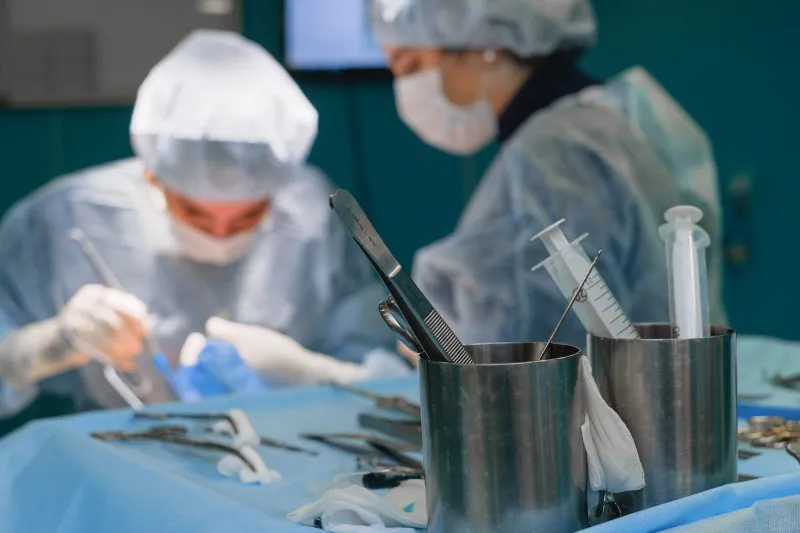
Imagine being asked to perform at the most important concert of your life. The stakes are as high as they get. The audience is watching your every move. And your skull is open.
That's not a metaphor. That is exactly what happened to Pianist Awadagin Pratt — well, not him specifically — but to a musician whose story has become one of the most genuinely jaw-dropping intersections of medicine and art in modern history. When neurosurgeons at a major medical center needed to remove a tumor dangerously close to the motor cortex of a professional pianist, they faced a problem that no textbook had a clean answer for: how do you cut into someone's brain without accidentally cutting away the thing that makes them them?
Their solution was to hand him a keyboard and ask him to keep playing.
The Problem With Operating on a Musician's Brain
The motor cortex is the strip of brain tissue responsible for voluntary movement. It runs roughly ear to ear across the top of your skull, and different sections of it control different parts of your body. For most patients undergoing tumor removal in that region, surgeons use electrical stimulation to map which areas control basic functions — speech, hand movement, sensation. They poke, they probe, they watch for twitches.
But for a concert pianist, "basic hand movement" isn't really the point. The question isn't whether the patient can lift a finger. The question is whether they can still play a Chopin nocturne at performance level after someone has been digging around near the tissue that makes that possible.
There's a meaningful difference between a hand that works and hands that play. Surgeons knew that standard motor mapping wasn't going to cut it — no pun intended. If they accidentally damaged even a subtle neural pathway, the patient might wake up technically able to grip a glass but forever unable to produce the kind of fine, rapid, coordinated finger movement that professional piano performance demands.
So the medical team made a call that sounds like something out of a fever dream: they would perform the operation while the patient was awake, with a keyboard positioned so he could play throughout the procedure.
Awake Brain Surgery Is More Common Than You Think — The Playing Part Less So
Here's the first thing that surprises most people: awake craniotomies are actually a fairly established neurosurgical technique. The brain itself has no pain receptors. Once the skull is open and the initial incision is made under local anesthesia, patients can be conscious and responsive during the procedure. Surgeons routinely keep patients awake to monitor speech and cognitive function in real time.
What made this case extraordinary wasn't the wakefulness. It was the performance.
The surgical team set up a small electronic keyboard within reach of the patient's hands. As surgeons worked, he played. Not scales. Not random notes to test finger function. He played actual repertoire — pieces he had performed on stages his whole career. The music served as a living, continuous diagnostic. If a particular area of the brain was touched or stimulated and his playing faltered, surgeons knew immediately they were in dangerous territory. If the notes kept coming, clean and correct, they could proceed.
By essentially turning the operating room into a concert hall — a deeply strange, sterile, fluorescent-lit concert hall — the team created a feedback loop that no imaging technology could replicate. The patient's own musicianship became the most precise instrument in the room.
What the Brain Reveals When It's Playing
Neuroscientists have known for decades that music does something unusual to the brain. Performing music, particularly at an advanced level, activates an extraordinary range of neural systems simultaneously — motor control, auditory processing, memory, emotion, timing, and spatial reasoning all fire at once. Brain scans of professional musicians show measurably different neural organization compared to non-musicians, with expanded representation in areas linked to fine motor control.
For surgeons, this actually creates a paradox. A musician's brain is more complex to map and more resilient in some ways, because the neural pathways supporting musical performance are so deeply reinforced through years of practice. But that same complexity means that subtle damage — the kind that might not show up in standard motor tests — could be devastating to the patient's professional life even if they appear functionally normal afterward.
Having the patient play during surgery essentially stress-tested the neural network in real time, under actual performance conditions. It was the difference between asking someone to walk a straight line and asking them to run a marathon. One test tells you something. The other tells you everything.
The Surgery Worked. The Music Never Stopped.
The outcome, remarkably, was exactly what the team had hoped for. The tumor was successfully removed. The patient's playing didn't falter in any meaningful way during the procedure, which gave surgeons the confidence to work aggressively enough to remove the mass without second-guessing every incision. And when the patient recovered, his motor skills — and his musicianship — remained intact.
It's the kind of story that makes you stop and reconsider what surgery actually is. We tend to think of it as purely mechanical: a problem in the body, a tool to fix it. But this procedure was something more layered than that. The surgeons needed to understand not just what the patient's brain did, but what it was — the specific, trained, irreplaceable thing that decades of practice had built inside it.
The keyboard on the operating table wasn't a quirky prop. It was a diagnostic tool, a safeguard, and in a strange way, a form of respect — an acknowledgment that the patient's identity was inseparable from his craft, and that preserving his life meant preserving his music too.
Somewhere in a hospital, a man played Chopin with his skull open, and the surgeons listened very, very carefully.
That's not a metaphor either. That's just what happened.