When Butter Was contraband: Five Foods the Government Treated Like Criminals
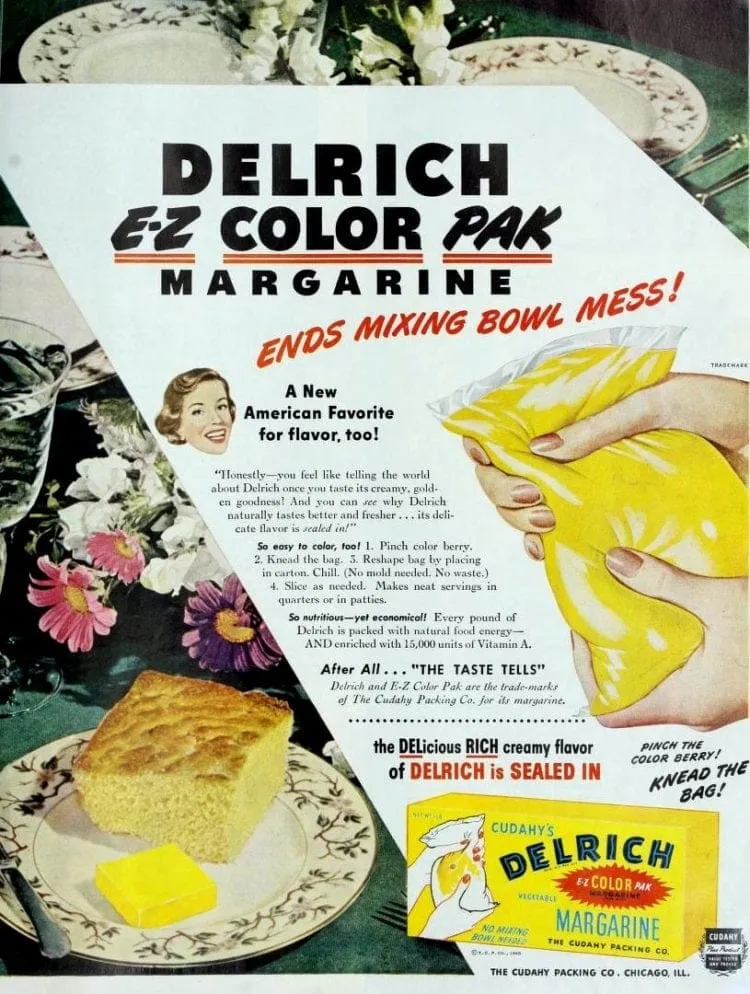
Photo: vintage margarine packets yellow dye 1950s kitchen butter, via clickamericana.com
The Great Butter Crackdown of the Midwest
Start with the strangest one: in the 1880s and beyond, several dairy states — including Wisconsin, Minnesota, and Iowa — made it illegal to sell yellow margarine. Wisconsin went furthest, at one point banning oleomargarine outright, and even after the courts forced a repeal, the state kept a law on the books requiring restaurants to serve margarine only if customers specifically requested it. Yes: in America's Dairyland, asking for butter substitute at a diner was, technically, a request that required paperwork-level specificity.
The logic was pure industry panic. Margarine, invented in France in the 1860s, was cheap — and dairy farmers saw it as an existential threat. So they lobbied, loudly, and for decades the government helped them fight the spreadable enemy.
The Pink Margarine Era
The federal government got in on the act too. The Oleomargarine Act of 1886 slapped a tax on margarine, and in 1902 a new law levied an even heavier tax on anything colored to look like butter. The result? Some manufacturers, unwilling to pay, sold the stuff pink — a shade chosen specifically to make it unappetizing. Families who wanted cheap margarine had to buy it white and mix in a little yellow dye packet at home, kneading it like playdough until it looked edible.
Wisconsin didn't fully repeal its colored-margarine restrictions until 1967. Minnesota held on until 1995. A century of food law, undone in fits and starts — and a few dusty statutes may still be technically on the books.
Absinthe: Banned on a Technicality
The green fairy spent decades on America's banned list, and here's the funny part: the ban wasn't really about thujone, the compound everyone blamed. Federal law banned absinthe for being "containing thujone" — but tests later showed vintage bottles had levels far below anything dangerous. It took until 2007 for properly regulated absinthe to legally return to American shelves, nearly a century after the ban began. The drink was guilty of a reputation, not a chemistry.
Sliced Bread: Banned for Three Months in 1943
In January 1943, U.S. officials banned sliced bread as a wartime measure — the reasoning being that the wax paper wrapping and the steel in slicing machines used resources better spent on the war effort. The public reaction was so immediate and so furious that the ban was rescinded in March. It remains one of the shortest food bans in American history, and the only one that made housewives write angry letters to the New York Times.
Oleo, Absinthe, and the Pattern
Look across these stories and a pattern emerges: none of these bans were really about safety. Butter laws protected a lobby. Absinthe protected a moral panic. Sliced bread was a resource mix-up. The government, when it comes to food, has a long history of regulating fear more than fact.
The next time you butter your toast, spare a thought for the generations of Americans who had to dye their margarine by hand or drive across state lines for the real thing. It sounds like a joke — but every word of it is on the legal record.