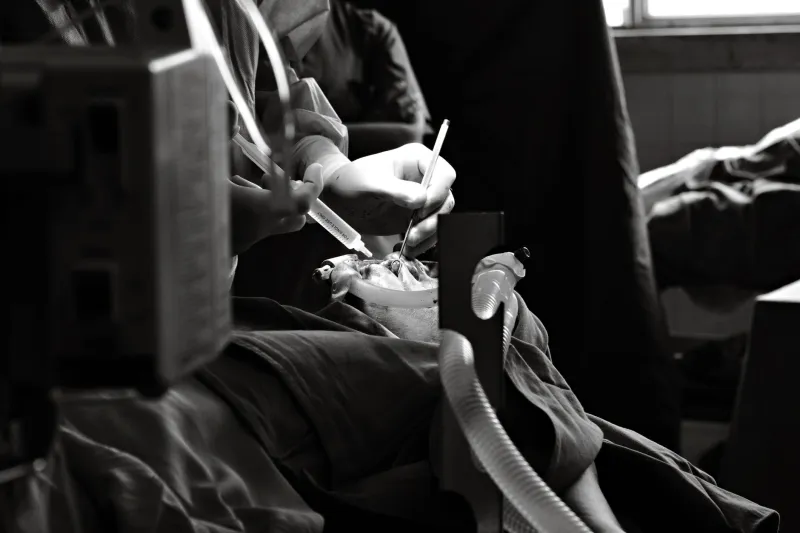
He Talked His Colleagues Through Removing His Own Brain Tumor — From the Operating Table
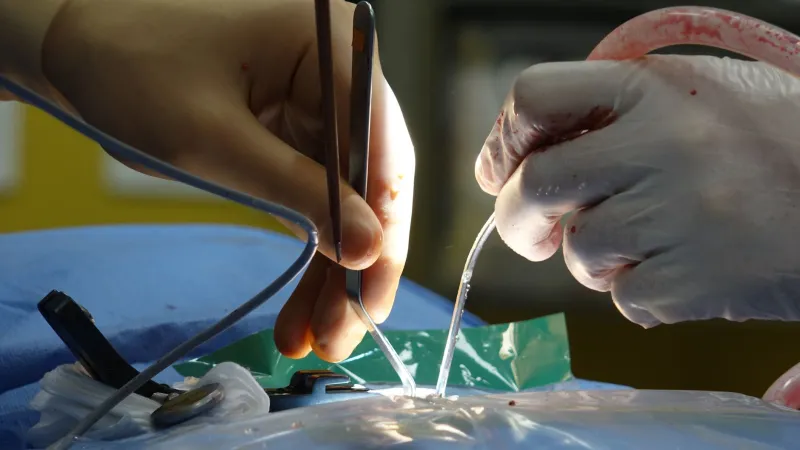
The Diagnosis Nobody Wants — Especially If You're a Brain Surgeon
There's a particular cruelty in a neurosurgeon being diagnosed with a brain tumor. You spend your career opening skulls, mapping the delicate geography of the human mind, and explaining to patients exactly what's at stake. Then one day, the scan on the lightbox is yours.
That was the reality facing Dr. Yuri Deigin — except the story doesn't end with a grim prognosis and a referral to a colleague. It ends with the surgeon sitting upright on his own operating table, talking his team through a procedure that most doctors would call impossible, inadvisable, and frankly a little unhinged.
And yet, it worked.
Why the Motor Cortex Changes Everything
Not all brain tumors are created equal. Location is everything. A tumor pressing against a region that controls memory or personality presents different surgical challenges than one embedded in the motor cortex — the strip of brain tissue responsible for voluntary movement.
Operate too aggressively on the motor cortex, and the patient wakes up unable to move their arm, their leg, or their face. Surgeons routinely perform what's called an awake craniotomy when working near this region precisely because of that risk. The patient stays conscious so they can respond to commands — squeeze this, wiggle that, say your name — giving the surgical team real-time feedback on whether they're drifting too close to something critical.
For Dr. Deigin, the tumor sat directly in that danger zone. Which meant any surgeon operating on him would need a conscious, cooperative patient.
He decided the most cooperative patient he could find was himself.
The Procedure, Step by Step
An awake craniotomy is already one of the stranger experiences modern medicine has to offer. The patient is sedated for the initial incision — skull open, scalp peeled back — then brought back to consciousness for the critical portion of the surgery. The brain itself has no pain receptors, which sounds like a horrifying fact until you realize it's also what makes this possible.
Dr. Deigin's case went further. According to accounts from his colleagues, he remained verbally engaged throughout the tumor removal, offering observations about his own neurological responses and, at certain points, actively directing the surgical approach. He was, in effect, the most informed person in the room about both the anatomy being operated on and the sensations being produced.
His team monitored him continuously. The moment his speech slurred or his motor responses shifted, they would know they'd gone too far. That feedback loop — surgeon as patient, patient as consultant — turned a standard awake procedure into something closer to a collaboration.
The tumor was successfully removed. Dr. Deigin retained full motor function.
This Isn't the First Time a Doctor Operated on Themselves
Self-surgery sits in its own strange corner of medical history. In 1961, Soviet physician Leonid Rogozov famously removed his own appendix during a research expedition in Antarctica — there was simply no one else qualified to do it, and leaving it would have killed him. The story became legendary.
But Deigin's case is different in a key way. He had options. He could have handed the case to any number of qualified colleagues. He chose self-direction not out of necessity but out of a calculated belief that no one could navigate the procedure with more precision than someone who could feel exactly what was happening in real time.
That's either the most rational decision a surgeon has ever made, or the most audacious one. Possibly both.
What Medicine Learned From One Man's Extraordinary Gamble
The medical community's reaction was predictably complicated. Ethicists raised concerns about informed consent — can a surgeon truly consent to operating on themselves? Does the power dynamic of being both the doctor and the patient create a conflict that undermines the entire framework of surgical care?
On the practical side, though, the case reinforced something neurosurgeons already suspected: awake craniotomies produce better outcomes near the motor cortex than procedures performed under full anesthesia, and a highly informed, motivated patient is an asset in the operating room rather than a liability.
Some researchers pointed to the case as an argument for expanding the use of awake craniotomies more broadly, particularly for tumors in eloquent brain regions — areas tied to speech, movement, or sensory processing — where real-time patient feedback can mean the difference between a full recovery and a permanent deficit.
The Part That's Hard to Shake
Here's what sticks with you after reading about this case: the man lying on the table and the man doing the surgery were having the same thoughts at the same time.
When a typical surgeon hesitates near a critical structure, they're reading the patient's face, watching the monitors, making educated guesses. When Dr. Deigin hesitated, he already knew the answer. He could feel it.
That's not medicine as most of us understand it. It's something stranger — a feedback loop so tight it barely resembles surgery at all.
And somehow, improbably, it's a true story.