They Were Born Three Minutes Apart — and the Calendar Made Them Legal Strangers
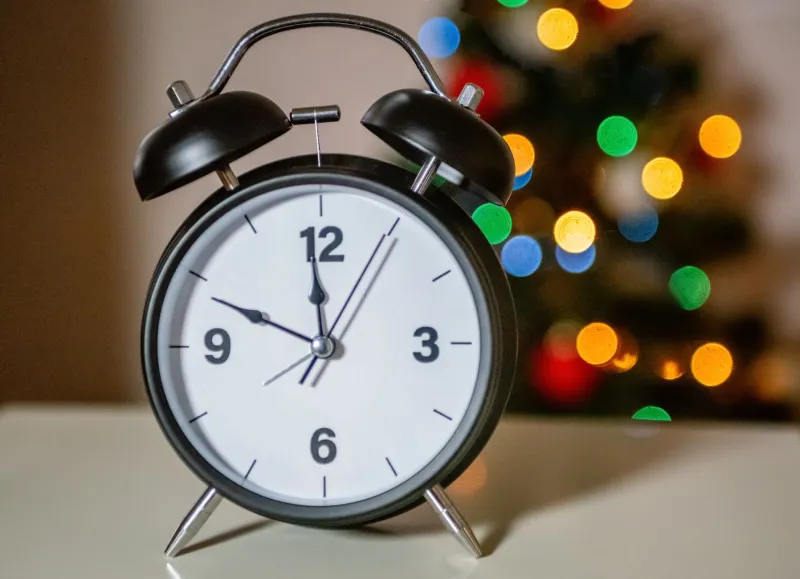
Biology and bureaucracy don't always agree. Usually, the disagreements are minor — a misspelled name on a form, a date entered in the wrong field. Annoying, but fixable. Then there are the cases where the disagreement is so fundamental that no amount of paperwork can fully resolve it, because the problem isn't a mistake. The problem is the calendar itself.
This is one of those cases.
Three Minutes That Changed Everything
In the early hours of January 1, 2012, a woman in a California hospital gave birth to twins. The first baby — a girl — arrived at 11:59 p.m. on December 31, 2011. The second — a boy — was born at 12:02 a.m. on January 1, 2012.
Three minutes separated them. Three minutes, and an entirely different year on the birth certificate.
The parents, Ronan and Maura McLaughlin, thought it was a funny story — the kind of thing you'd tell at birthday parties, the kind of quirk that makes a family memorable. What they didn't fully anticipate was how seriously American administrative systems would take that three-minute gap, and how persistently it would resurface throughout their children's lives.
This wasn't a unique event. It happens somewhere in the United States every single New Year's Eve, and in smaller numbers at every other calendar boundary throughout the year. But the New Year's version is the one that generates the most paperwork, because it doesn't just create two children with different birthdays. It creates two children who are, in the eyes of every government system that cares about age, born in different years.
The First Problem: School
In most American states, the cutoff date for kindergarten enrollment falls sometime in late summer or early fall — typically September 1st. Children who turn five before the cutoff enroll that year. Children who miss it wait another year.
For the McLaughlin twins, the question of school enrollment became an immediate source of confusion. Both children were, physically and developmentally, the same age. They had spent the same number of days alive. They had reached the same milestones at the same time. But the older twin — the girl born on December 31st — was technically a year older than her brother in the eyes of the school district, because her birth year was 2011 and his was 2012.
In practice, most school districts exercise discretion in cases like this, and the twins were enrolled together. But the discretion required a formal administrative review, parental documentation, and a meeting with district officials that other families starting kindergarten that year did not have to navigate. It was the first of many such conversations.
Driver's Licenses and the Year That Wouldn't Cooperate
The more consequential version of the same problem arrived when the twins turned sixteen — or rather, when one of them turned sixteen and the other technically didn't until the following year.
In California, the minimum age for a learner's permit is fifteen and a half, calculated from the birth year on record. For the older twin, that calculation resolved cleanly. For the younger twin, born three minutes later in a different year, the math produced a result that was three minutes out of sync with reality but twelve months out of sync with the DMV's records.
The DMV, as an institution, is not designed to handle this kind of nuance. Its systems take a birth year, apply a formula, and generate a date. The idea that two people born in the same delivery room from the same pregnancy might have different eligibility dates for the same milestone is not a scenario the database architects planned for.
The family worked around it — documentation, phone calls, a supervisor who was willing to look at the actual circumstances rather than just the fields in the system. But again, it required intervention that shouldn't have been necessary.
The Voting Rights Wrinkle
The stakes got genuinely higher when the twins approached their eighteenth birthdays — which, legally, fell in different years.
The older twin became eligible to vote in the November 2029 election cycle. The younger twin, born in 2012, would not legally reach voting age until 2030. The practical difference was roughly eleven months of voting eligibility, which in a close election year could theoretically matter.
More abstractly, it raised a question that legal scholars find genuinely interesting: two people who are, by every biological and developmental measure, identical in age can have meaningfully different legal standings purely because a hospital clock read two different numbers during a single delivery.
The Fourteenth Amendment guarantees equal protection under the law. It does not, however, say anything about twins born across a calendar boundary.
The Law Wasn't Built for This
American law, like most legal systems, treats age as a clean, linear variable. You are born on a date. That date determines when you can drive, vote, drink, sign a contract, and be tried as an adult. The system works because, for the vast majority of people, age is unambiguous.
Twins born across a year boundary expose the assumption underneath that system: that age is a proxy for time elapsed since birth, and that time elapsed since birth is the same for everyone born on the same date. When two people are born three minutes apart but in different calendar years, both of those assumptions break down simultaneously.
Legal scholars have proposed various fixes — treating twins as legally the same age as the firstborn, or creating a formal administrative category for year-boundary births. None of these proposals have gained legislative traction, partly because the affected population is small and partly because the edge cases involved in any proposed solution create their own complications.
The Birthday Party Problem
For what it's worth, the McLaughlin family has settled on a practical solution that most year-boundary twins eventually arrive at: they celebrate on January 1st, splitting the difference, and explain the rest to anyone who asks.
The girl born on December 31st gets a New Year's Eve birthday that technically belongs to her. The boy born on January 1st gets a New Year's Day birthday that is, in every meaningful sense, also his sister's. They share a cake. They do not share a legal birth year.
Somewhere in a California filing cabinet, two birth certificates tell the story of three minutes that the calendar turned into a lifetime of paperwork. The twins themselves, by all accounts, find it funny.
The DMV, presumably, does not.